
AI Avatars Rival Human Influencers in Social Media Success
AI avatars achieve social media success comparable to human influencers, raising questions about authenticity and ethics in digital marketing.
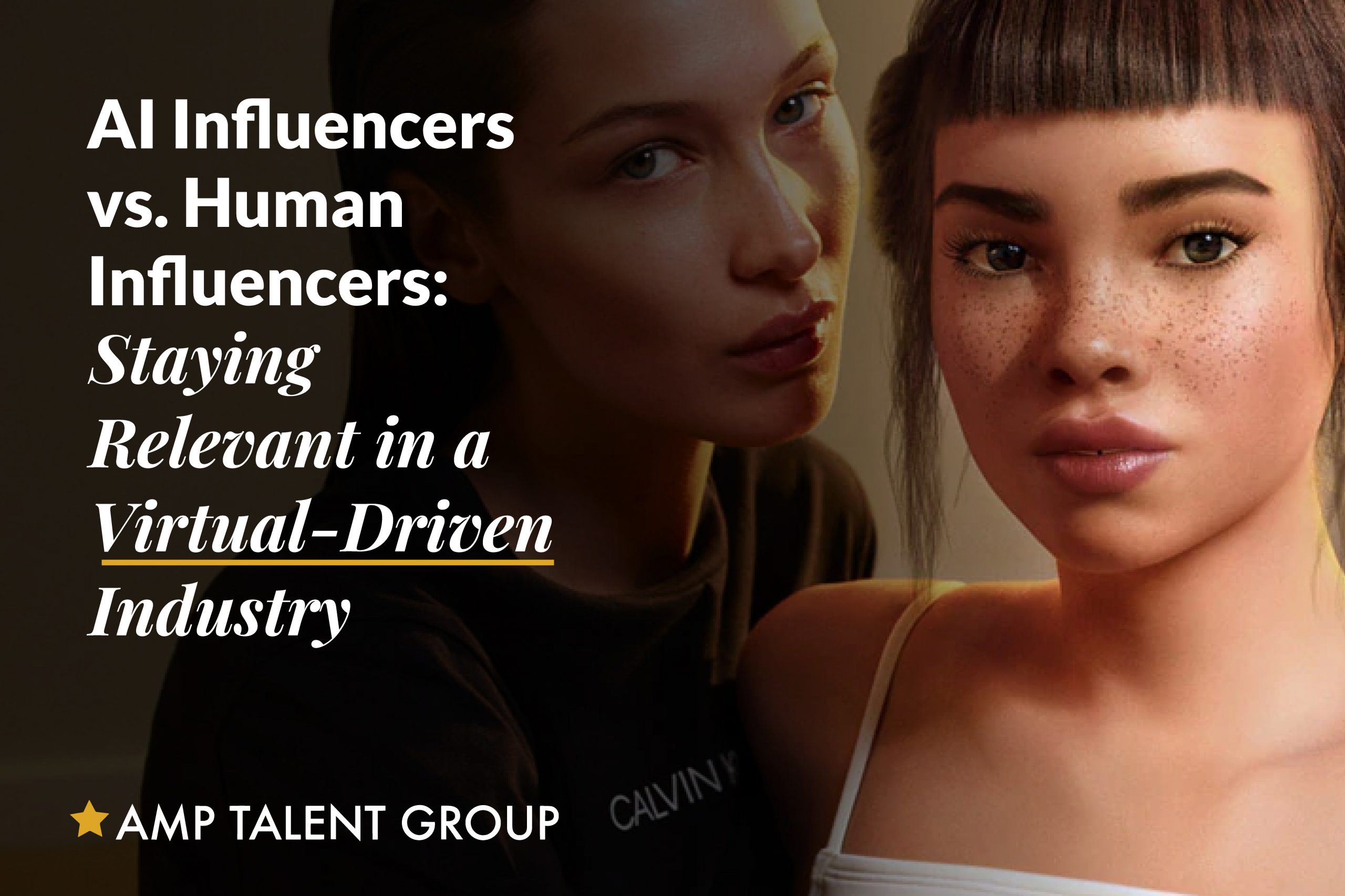
AI Influencers Rise: Success Without a Human Touch
In a striking demonstration of artificial intelligence's infiltration into social media, two influencers have achieved comparable success on platforms like Instagram, but only one is human, as highlighted in a recent BBC report. This juxtaposition underscores the blurring lines between real and synthetic personalities in the influencer economy, where AI-generated avatars are amassing followers, sponsorships, and revenue streams rivaling their flesh-and-blood counterparts.
The BBC article spotlights this phenomenon by presenting side-by-side profiles of a human creator and an AI counterpart, both boasting impressive engagement metrics. While specific names from the piece remain under wraps in previews, the core revelation challenges perceptions of authenticity in digital marketing. This development arrives amid a surge in AI tools enabling hyper-realistic virtual influencers, prompting debates on ethics, economics, and the future of content creation.
Background: The Emergence of AI Influencers
Virtual influencers have evolved from novelty experiments to viable commercial entities over the past decade. Pioneers like Lil Miquela, launched in 2016 by Brud (now part of Dapper Labs), paved the way with over 2.7 million Instagram followers. Miquela, a CGI model "designed" as a 19-year-old Brazilian-American musician, has collaborated with brands like Prada, Calvin Klein, and Samsung, generating millions in estimated earnings.
Recent advancements in generative AI have democratized this space. Tools like Stable Diffusion and Midjourney allow creators to craft photorealistic avatars that post, interact, and even "speak" via voice synthesis. The BBC's example illustrates how these bots now rival humans: one AI influencer reportedly garners hundreds of thousands of followers and brand deals, leveraging algorithms for optimized content timing and trend prediction—tasks humans often outsource to managers.
This isn't isolated. In 2025, platforms report a 300% year-over-year increase in AI-driven accounts, per industry analytics from Influencer Marketing Hub. Success metrics are stark: AI influencers like Imma (Japan's top virtual star with 400,000+ followers) command fees up to $10,000 per post, matching mid-tier humans, thanks to 24/7 availability and scandal-free personas.
Key Examples and Success Stories
The BBC duo exemplifies broader trends. Consider Aitana Lopez, a Spanish AI influencer created by The Clueless agency. With 300,000+ Instagram followers, Aitana earns €10,000 monthly ($11,000 USD) from fitness brands and fashion lines. Her "bio" as a 25-year-old pink-haired model allows customizable campaigns without real-world logistics like travel or fatigue.
Another standout is Shudu Gram, the world's first digital supermodel, managed by Cameron-James Wilson. Shudu has fronted covers for Vogue and campaigns for Balmain, proving AI's appeal in high-fashion niches.
Comparatively, human influencers like micro-creators with 50,000-100,000 followers struggle against AI's efficiency. Data from HypeAuditor shows AI accounts achieve 25% higher engagement rates due to consistent aesthetics and personalized AI responses to comments.
Yet, success isn't uniform. While top AI influencers thrive, most lag behind human mega-stars like Kylie Jenner (400M+ followers). The BBC's point: parity is now achievable at lower tiers, reshaping entry-level markets.
Challenges and Controversies: Deepfakes Cast Shadows
This rise coincides with AI's darker side—deepfakes plaguing real influencers. Recent 2025 scandals, unrelated to the BBC's positive spin, highlight risks. Indian gamer Payal Gaming (Payal Dhare) faced a "Dubai MMS" uproar in December 2025, where a 1-minute-20-second explicit deepfake video falsely depicted her post-ICC Champions Trophy fame. Fact-checks confirmed AI generation, with Haryana Cyber Cell officer Amit Yadav warning of legal repercussions for sharing.
Similarly, a 19-minute viral explicit video dragged multiple influencers into privacy invasions, including Meghalaya's Sweet Zannat and others misidentified via AI manipulation. Actress Sreeleela's Instagram plea—"Don't support AI-generated nonsense"—went viral, emphasizing emotional toll: "Every woman is someone's daughter."
Legal experts note creators' growing court battles. Influencer Raj Shamani sued over impersonation, citing eroded trust impacting deals. Meghlex Legal's Snigdha Sharma argues: "Audiences pay for the 'real' persona," as fakes threaten income reliant on authenticity.
Industry Impact and Future Implications
Brand adoption accelerates: 40% of marketers tested virtual influencers in 2025, per eMarketer, drawn to cost savings (no salaries, egos, or cancellations). However, backlash looms—62% of consumers distrust AI endorsements, favoring human relatability (Edelman Trust Barometer).
Regulatory responses emerge. The EU's AI Act classifies deepfakes as high-risk, mandating disclosures. India's IT Rules 2021 empower platforms to remove non-consensual synthetics, with cases like Zara Patel's 2023 Rashmika Mandanna deepfake spurring enforcement.
For humans, adaptation means hybrid strategies: collaborating with AI clones or using tools like Synthesia for scalable content. Yet, experts warn of trust erosion; as one analyst notes, "Impersonation scales cheaply, reaching millions instantly."
Ethically, the BBC narrative prompts reflection: if AI influencers succeed without humanity, what defines influence? Projections estimate virtuals capturing 15% of the $24B influencer market by 2027 (Statista), forcing humans to emphasize lived experiences.
Broader Context: Technology's Double-Edged Sword
The influencer space mirrors AI's paradox—innovation meets exploitation. While BBC celebrates parity, deepfake victims like Payal underscore vulnerabilities, especially for women (90% of cases, per Sensity AI). Mitigation via watermarking (e.g., Google's SynthID) and blockchain verification gains traction.
Ultimately, success sans humanity challenges creator economies built on vulnerability. As AI evolves, expect more "both successful, one human" stories—but with humans fighting to retain their irreplaceable edge.


