
AI Buzzwords Define 2025 Tech Landscape
AI buzzwords in 2025 redefine tech innovation, driven by multimodal AI and quantum integration, impacting industries and sparking new trends.
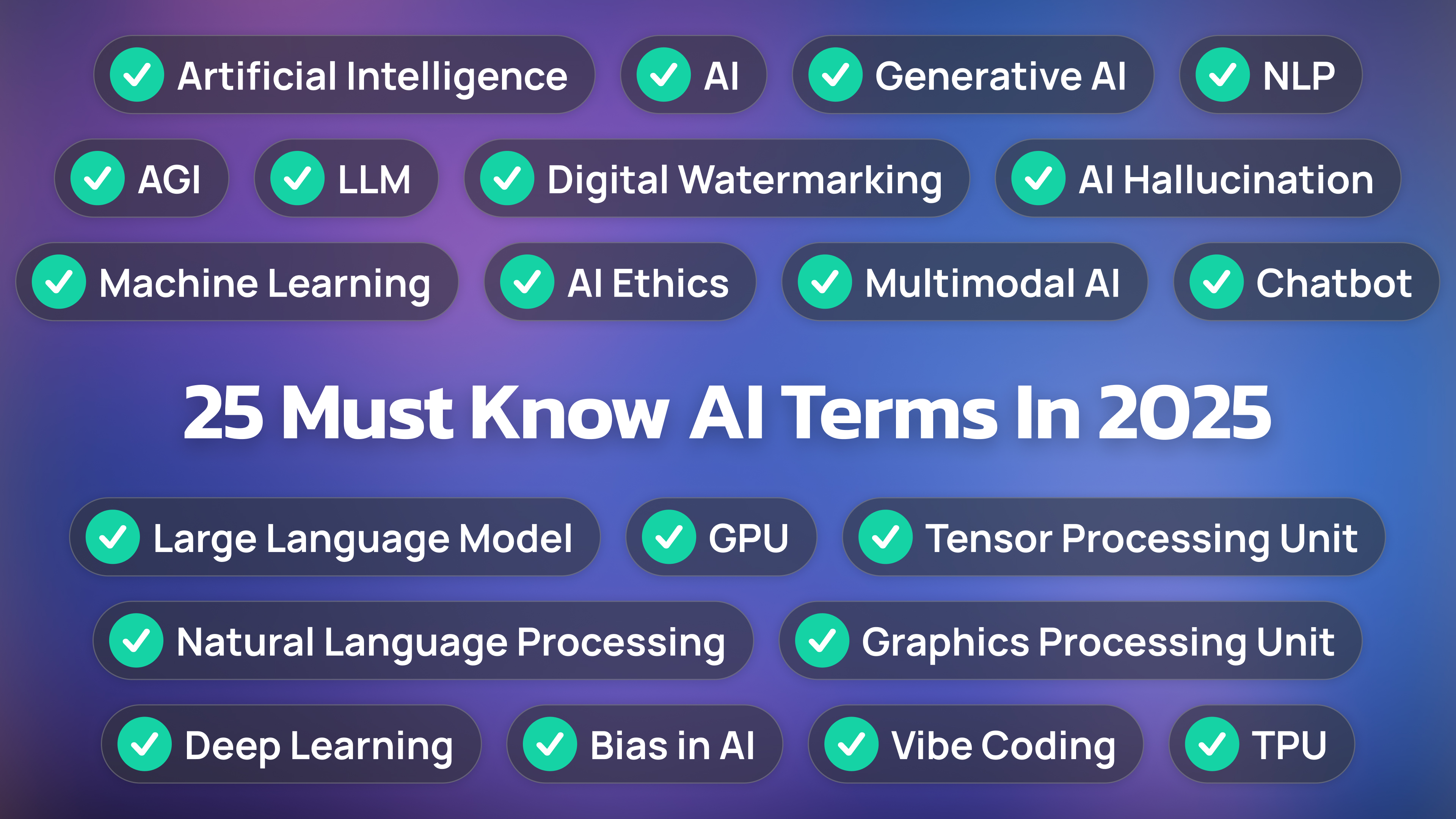
Decoding 2025's AI-Driven Tech Lingo: The Buzzwords Redefining Innovation
New York, December 2025 – As artificial intelligence reshaped industries worldwide in 2025, a torrent of new tech lingo emerged, blending hype, precision, and futurism. The New York Times spotlighted this phenomenon in its feature "Decoding the A.I.-Driven Tech Lingo From 2025," unraveling terms that dominated boardrooms, startups, and social feeds. Driven by breakthroughs in multimodal AI, quantum integration, and ethical frameworks, these buzzwords not only captured investor imagination but also signaled profound shifts in how technology evolves. Experts warn that mastering this lexicon is essential for anyone navigating the AI gold rush, with adoption rates soaring 300% year-over-year according to Gartner reports.
Background: The Explosion of AI Jargon in 2025
The year 2025 marked a pivotal inflection point for AI, following explosive growth in generative models and edge computing. Venture capital poured $150 billion into AI startups, per Crunchbase data, fueling an ecosystem where rapid innovation outpaced traditional language. The New York Times article, published mid-December, dissected over 20 terms that transitioned from niche labs to mainstream discourse. This linguistic boom stemmed from events like OpenAI's o3 model release in June, Anthropic's constitutional AI upgrades, and Google's quantum-AI hybrid announcements at I/O 2025.
What began as insider shorthand evolved into marketing gold. For instance, "agentic AI" – autonomous systems that plan and execute tasks without human prompts – became ubiquitous after Microsoft's Copilot ecosystem integrated it across Office suite, boosting productivity claims by 40%. Linguists and tech analysts, including those from MIT's Media Lab, noted that 2025's lingo reflected a maturing field: less "hallucination" talk, more focus on "verifiability" and "scaffolding".

Infographic from The New York Times illustrating key 2025 AI terms like agentic AI and neuromorphic computing.
Key Terms Breaking Down the AI Lexicon
The Times highlighted a curated list of terms, each tied to tangible advancements. Here's a breakdown of the most influential:
-
Agentic AI: Systems that act like digital agents, chaining reasoning steps for complex goals. xAI's Grok-3 exemplified this, autonomously debugging code in real-time demos.
-
Mixture of Experts (MoE): Architectures where specialized "expert" sub-models activate selectively, slashing compute costs by 50-70%. Meta's Llama 4 leveraged MoE for its 2-trillion-parameter scale.
-
Neuromorphic Computing: Hardware mimicking brain synapses for ultra-efficient AI. IBM's TrueNorth successor hit commercial viability, enabling always-on edge AI with 100x energy savings.
-
Synthetic Data: AI-generated datasets addressing privacy laws like EU AI Act. Usage surged 400%, per McKinsey, powering models without real-world biases.
-
Post-Training Quantization: Compressing models post-training for deployment on phones. Apple's on-device Intelligence features relied on this, shrinking models from 100GB to under 5GB.
Other notables included "RAG" (Retrieval-Augmented Generation) evolving into "Advanced RAG" with vector databases, and "Constitutional AI", Anthropic's safeguard against misalignment. Quotes from the article captured the essence: "These aren't just words; they're the scaffolding of tomorrow's economy," said AI ethicist Timnit Gebru.

Diagram depicting agentic AI workflows, sourced from xAI's 2025 technical whitepaper.
Industry Impact and Adoption Trends
This lingo's rise influenced sectors beyond tech. In healthcare, "federated learning" enabled privacy-preserving diagnostics, with Mayo Clinic reporting 25% faster drug discoveries. Finance adopted "zero-shot inference" for fraud detection, cutting false positives by 60% at JPMorgan. Enterprises scrambled to upskill: LinkedIn data showed "AI fluency" certifications spiking 500%, while 78% of Fortune 500 firms mandated lingo training.
Challenges persist. Overhype led to "AI washing," where vague terms masked mediocre products. Regulators, including the U.S. FTC, cracked down, fining three startups $20 million for misleading MoE claims. Globally, China's Baidu pushed "embodied AI" for robotics, dominating 60% of humanoid deployments.

Intel's Loihi 2 neuromorphic chip, a cornerstone of 2025's efficient AI hardware revolution.
Future Implications: Beyond Buzzwords to Blueprints
Looking to 2026, analysts predict consolidation. IDC forecasts agentic workflows automating 30% of white-collar jobs, while synthetic data markets hit $10 billion. Ethical lingo like "alignability" – measuring AI adherence to human values – will dominate as incidents like the Midjourney bias scandal underscore risks.
This lexicon democratizes AI, empowering non-experts, but demands vigilance against dilution. As the Times concluded, "In 2025, speaking the language of AI wasn't optional – it was operational." With quantum entanglement and brain-computer interfaces on the horizon, expect 2026's dictionary to expand further, bridging human ingenuity and machine intelligence.


