
AI Chatbots in the Workplace: Efficiency Gains Come With Hidden Costs to Team Dynamics
As more workers rely on AI chatbots for daily tasks, organizations face a paradox: productivity tools that may be eroding the interpersonal connections essential to workplace culture and collaboration.
AI Chatbots Transform Workplace Efficiency—But at What Cost?
The adoption of AI chatbots in professional environments is accelerating rapidly. Workers are increasingly turning to these tools for assistance with routine tasks, information retrieval, and problem-solving. While the efficiency gains are measurable and significant, emerging concerns suggest that heavy reliance on AI-mediated communication may be subtly degrading the interpersonal relationships that form the backbone of healthy workplace cultures.
The Productivity Promise
AI chatbots deliver tangible operational benefits. These tools can handle repetitive inquiries, streamline administrative workflows, and provide instant responses to common questions—functions that traditionally consumed significant employee time. Organizations implementing chatbot solutions report substantial reductions in manual workload, freeing staff to focus on higher-value activities requiring human judgment and creativity.
The appeal is straightforward: faster answers, reduced bottlenecks, and lower operational friction. For HR departments, customer service teams, and technical support functions, chatbots represent a genuine productivity multiplier.
The Relationship Paradox
Yet beneath these efficiency metrics lies a more nuanced challenge. When employees default to chatbots for assistance, they bypass the informal interactions that build professional relationships. A quick question to a colleague—whether answered or not—creates a moment of human connection. It establishes rapport, demonstrates vulnerability, and reinforces team cohesion.
Chatbots eliminate this friction entirely. They're available 24/7, non-judgmental, and require no social reciprocity. But in doing so, they may be reducing the frequency and quality of peer-to-peer interactions that strengthen workplace bonds.
Key Concerns
- Reduced spontaneous collaboration: Fewer questions asked of colleagues means fewer opportunities for unexpected insights and cross-functional knowledge sharing
- Weakened mentorship dynamics: Junior employees who rely on chatbots may miss informal learning opportunities that come from asking experienced colleagues for guidance
- Eroded institutional knowledge: When answers come from algorithms rather than people, organizational culture and context are lost
- Isolation risks: Remote and hybrid workers may feel even more disconnected if their primary "colleague" interactions are with AI systems
The Data Picture
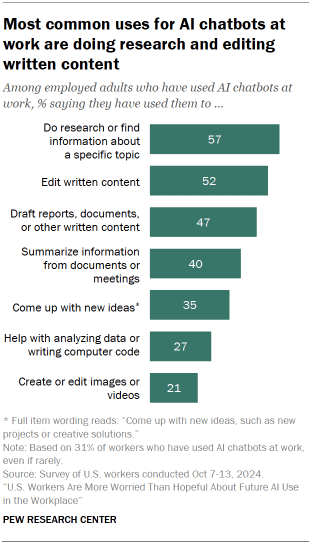
Recent workplace surveys indicate that worker adoption of AI chatbots is climbing steadily. A significant portion of the workforce now uses these tools regularly for job-related tasks. However, research on the social implications remains limited, and most organizations have not yet grappled with the long-term cultural consequences of this shift.
Finding the Balance
The challenge for forward-thinking organizations is not to reject chatbots but to deploy them strategically. This means:
- Preserving human touchpoints for questions that build relationships, even if chatbots could answer them faster
- Using chatbots for genuinely routine tasks while maintaining human channels for complex or relationship-building interactions
- Monitoring team dynamics to identify early signs of isolation or disconnection
- Creating intentional spaces for collaboration that chatbots cannot replace
Looking Ahead
As AI tools become more sophisticated and ubiquitous, the tension between efficiency and human connection will only intensify. Organizations that succeed will be those that view chatbots as supplements to human interaction rather than replacements for it.
The goal should not be to maximize chatbot usage, but to optimize the balance between technological efficiency and the irreplaceable value of human relationships in the workplace.
Key Sources
- Pew Research Center: Workers' experience with AI chatbots in their jobs
- Winslow: How an HR Chatbot Can Cut HR Workload by 75%
- Beetroot: AI Chatbots and Virtual Assistants in GreenTech


