
AI in Healthcare: Empowering Patients and Enhancing Care
Explore how AI is transforming healthcare by empowering patients and enhancing clinical collaboration, as discussed by Microsoft Health executives.
AI in Healthcare: Empowering Patients and Enhancing Care
AI’s Role in Patient Empowerment
In a revealing podcast hosted by the University of Miami’s Miller School of Medicine, James Weinstein, M.D., M.S., Senior Vice President of Microsoft Healthcare, shared insights on how artificial intelligence (AI) is reshaping healthcare through patient empowerment and collaboration between clinicians and AI systems. The conversation with Dean Henri R. Ford, M.D., M.H.A., highlighted how AI is evolving from a tool of automation into a partner in clinical decision-making and personalized patient care.
AI as a Digital Team Member, Not a Replacement
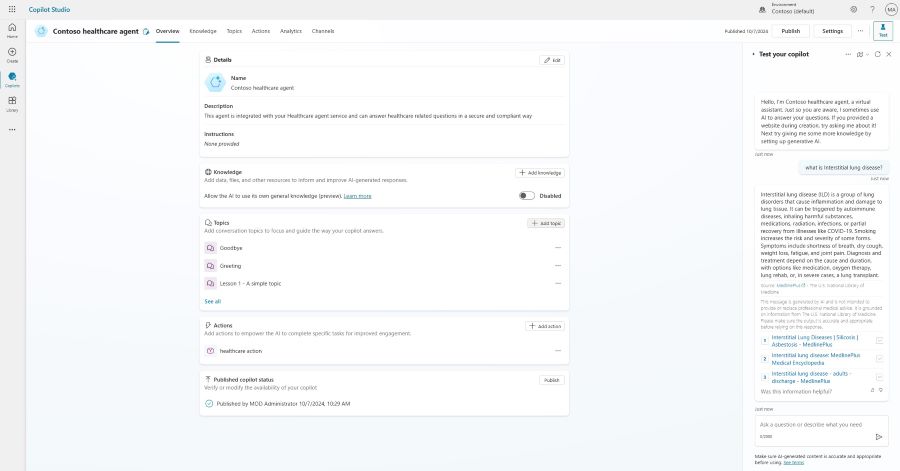
Dr. Weinstein emphasized that the goal of AI in healthcare is not to replace physicians but to form a "digital teamwork" dynamic where AI assists clinicians in making faster, more accurate, and equitable decisions. Demonstrating this live on the podcast, Weinstein used Microsoft’s generative AI chatbot, Co-Pilot, to answer a complex medical query about hypercholesterolemia, impressing Dean Ford with the chatbot’s ability to provide clear, clinically relevant information instantly.
This example underscores Microsoft Healthcare’s vision: leveraging AI to break down barriers, especially for patients who face challenges accessing care or understanding medical information. AI’s role is to augment the clinician’s expertise, freeing healthcare professionals to focus on complex judgment, empathy, and innovation rather than routine tasks.
Personalized Patient Empowerment Through AI
The conversation dovetailed with broader trends in healthcare, where AI is being deployed to enhance patient engagement and education. For instance, emerging AI tools integrate clinical encounter data with patient-specific contexts to generate highly personalized educational materials. Rather than generic advice, patients receive tailored recommendations that connect to their lifestyle and interests, such as encouraging walking by referencing a patient’s dog or community activities.
This hyper-personalization represents a paradigm shift in patient empowerment, enabling individuals to better understand and manage their health conditions with AI-facilitated support that is both medically accurate and relatable.
Addressing Ethical Concerns and the Future of Hybrid Expertise
Despite the enthusiasm, experts acknowledge the challenges and ethical considerations surrounding AI adoption in healthcare. Concerns include the “black box” problem—where AI reasoning is opaque—and the potential erosion of clinicians’ diagnostic skills. However, thought leaders argue for a model where AI provides evidence-based recommendations while physicians retain ultimate decision authority, ensuring that human empathy and ethical standards remain central to care.
Patients’ trust in AI is expected to grow as the technology becomes more convenient, affordable, and integrated into routine care, similar to autonomous vehicles’ acceptance despite initial fears. The future of medicine is envisioned as a hybrid expertise model, balancing AI’s cognitive advantages with clinicians’ nuanced understanding and patient relationships.
Microsoft’s Strategic Role in AI-Driven Healthcare Innovation
Under Dr. Weinstein’s leadership, Microsoft Healthcare is driving innovation at the intersection of medicine and technology. The company’s AI initiatives aim to enhance health system quality and efficiency by embedding AI tools that support clinicians and empower patients. Microsoft’s Co-Pilot and other AI solutions are designed to integrate seamlessly into clinical workflows, supporting evidence-based medicine and personalized care.
This approach aligns with broader industry trends where healthcare providers increasingly embrace AI to improve patient engagement, operational efficiency, and clinical outcomes. AI-powered ambient listening and contextual data synthesis are examples of advances that help clinicians better connect with patients while reducing administrative burdens.
Context and Implications
The dialogue between Microsoft’s AI health executives and academic leaders like Dean Ford reflects a critical moment in healthcare’s digital transformation. As AI technologies mature, they offer unprecedented opportunities to democratize access to expert medical knowledge and foster patient-centered care models.
However, the transition requires careful management of ethical issues, transparency, and ongoing clinician involvement to ensure AI acts as a trustworthy, effective partner. Microsoft’s strategy highlights the importance of embedding empathy and patient empowerment at the heart of AI innovation in healthcare, a stance that may shape the future trajectory of medical practice globally.
Visual Elements to Include
- Portraits of James Weinstein, M.D., and Dean Henri R. Ford, M.D., during the podcast recording session
- Microsoft Healthcare Co-Pilot interface screenshots demonstrating AI medical query responses
- Infographics showing AI’s role in personalized patient education and clinical decision support
- University of Miami Miller School of Medicine and Microsoft Healthcare logos
These visuals will reinforce the article’s focus on the collaboration between healthcare expertise and AI technology.
This comprehensive view highlights Microsoft Healthcare’s pioneering efforts to harness AI for patient empowerment and improved clinical collaboration, illustrating the transformative potential of AI in modern medicine.


