
AI's Energy Dilemma: Beyond Fossil Fuels
AI's energy demands are soaring, but fossil fuels aren't the solution. A shift to renewables and efficiency is crucial for sustainable growth.
AI's Energy Dilemma: Beyond Fossil Fuels
The rapid growth of artificial intelligence (AI) technologies is driving an unprecedented surge in electricity demand, particularly from data centers that power AI models. Despite increased calls to “dig” for more fossil fuels, experts agree that simply expanding traditional energy sources will not solve AI’s looming power shortage. Instead, a complex transition toward renewable energy, efficiency improvements, and greater transparency is essential to meet AI’s growing energy appetite sustainably.
The Scale of AI’s Energy Consumption
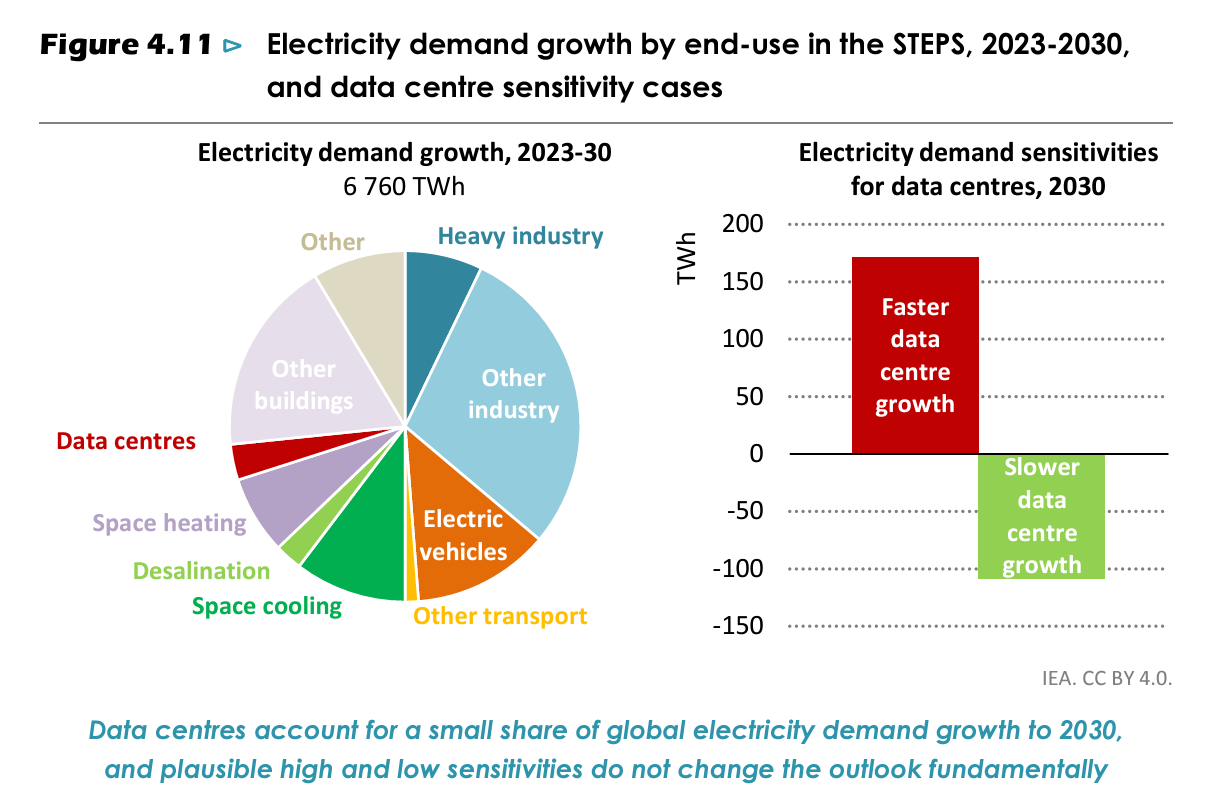
Recent studies show that global data centers consumed approximately 415 terawatt-hours (TWh) of electricity in 2024, accounting for about 1.5% of total global electricity demand. AI workloads are a major contributor to this figure and are expected to drive demand to nearly 945 TWh by 2030, more than doubling in less than a decade.
AI's energy consumption is driven by two main processes:
- Training large language models (LLMs) like GPT-4 and GPT-5, which require intense computational power over weeks or months.
- Inference, which is the energy used to generate responses to user queries, occurring billions of times daily.
For example, OpenAI CEO Sam Altman disclosed that each ChatGPT query consumes roughly 0.34 watt-hours of electricity, equivalent to a fraction of watching TV for a few seconds. Google reported even lower figures for its Gemini AI, achieving a 33-fold decrease in energy consumption per query in just one year, down to about 0.24 watt-hours per query. However, research from the University of Rhode Island warns that future AI models like GPT-5 could consume up to 18 watt-hours per query on average, with some queries hitting 40 watt-hours, representing an eightfold increase over current models.
The Limits of Fossil Fuel Expansion: Why Digging More Won’t Work
The phrase “Dig, Baby, Dig” captures the instinctive response to energy shortages: extract more fossil fuels like coal, oil, and natural gas. However, experts and industry analysts underline that this approach is both environmentally and practically unsustainable for AI’s energy needs.
- Coal’s environmental toll: Burning coal emits high levels of CO2 and pollutants, undermining global climate commitments.
- Renewables outpacing fossil fuels: In 2025, renewable energy sources like solar and wind are growing faster than overall electricity demand in many regions, marking a critical turning point away from fossil fuels.
- Grid stability issues: AI data centers often require highly reliable, low-fluctuation power supplies. Fossil fuel plants can struggle to balance the rapid, large fluctuations in AI power demand, unlike flexible renewable setups combined with storage.
Thus, relying on increased fossil fuel extraction will exacerbate climate change and may not provide the grid stability needed to support AI infrastructure.
The Shift Toward Renewable Energy and Efficiency
To solve AI’s power shortage sustainably, the industry and governments are focusing on:
- Renewable energy integration: Solar, wind, and other renewables are increasingly powering data centers. The rapid growth in renewables (solar up 31% in early 2025) is promising for meeting AI’s demand without added emissions.
- Energy efficiency improvements: Google’s reduction in energy per query by 33 times and carbon emissions by 44 times between 2024-2025 show how optimized software, hardware, and operational techniques can drastically cut AI’s power needs.
- Transparency and auditing: There is a growing push for transparency in the AI industry regarding energy use and carbon emissions. This can help stakeholders understand impacts and target improvements effectively.
Broader Context and Implications
- Data center growth and emissions: Data centers currently contribute a relatively small share of global emissions, but their share could rise to 35-50% of data center power use by 2030 due to AI proliferation.
- Economic and policy challenges: Governments face balancing AI-driven economic growth with climate goals. Policies encouraging renewable energy adoption and energy-efficient technologies are critical.
- Uncertain future demand: The explosion of AI applications—from chatbots to autonomous vehicles—makes precise forecasts difficult. Demand could increase faster than expected, requiring more aggressive innovation in energy sourcing and consumption.
Conclusion
AI’s power shortage is a complex challenge that cannot be addressed by simply “digging” for more fossil fuels. The environmental cost and grid constraints make this approach unviable. Instead, a combination of rapid renewable energy expansion, technological efficiency gains, and transparency in energy use must underpin efforts to sustainably power AI’s future growth. As AI becomes increasingly central to the global economy, solving its energy puzzle is essential for both technological progress and climate stability.


