
Allen Institute Unveils Olmo 3: Open-Source Reasoning Models for the AI Community
The Allen Institute has released Olmo 3, a suite of open-source AI models designed to advance reasoning capabilities and democratize access to large language models. The release marks a significant contribution to the open-source AI ecosystem.
Allen Institute Unveils Olmo 3: Open-Source Reasoning Models for the AI Community
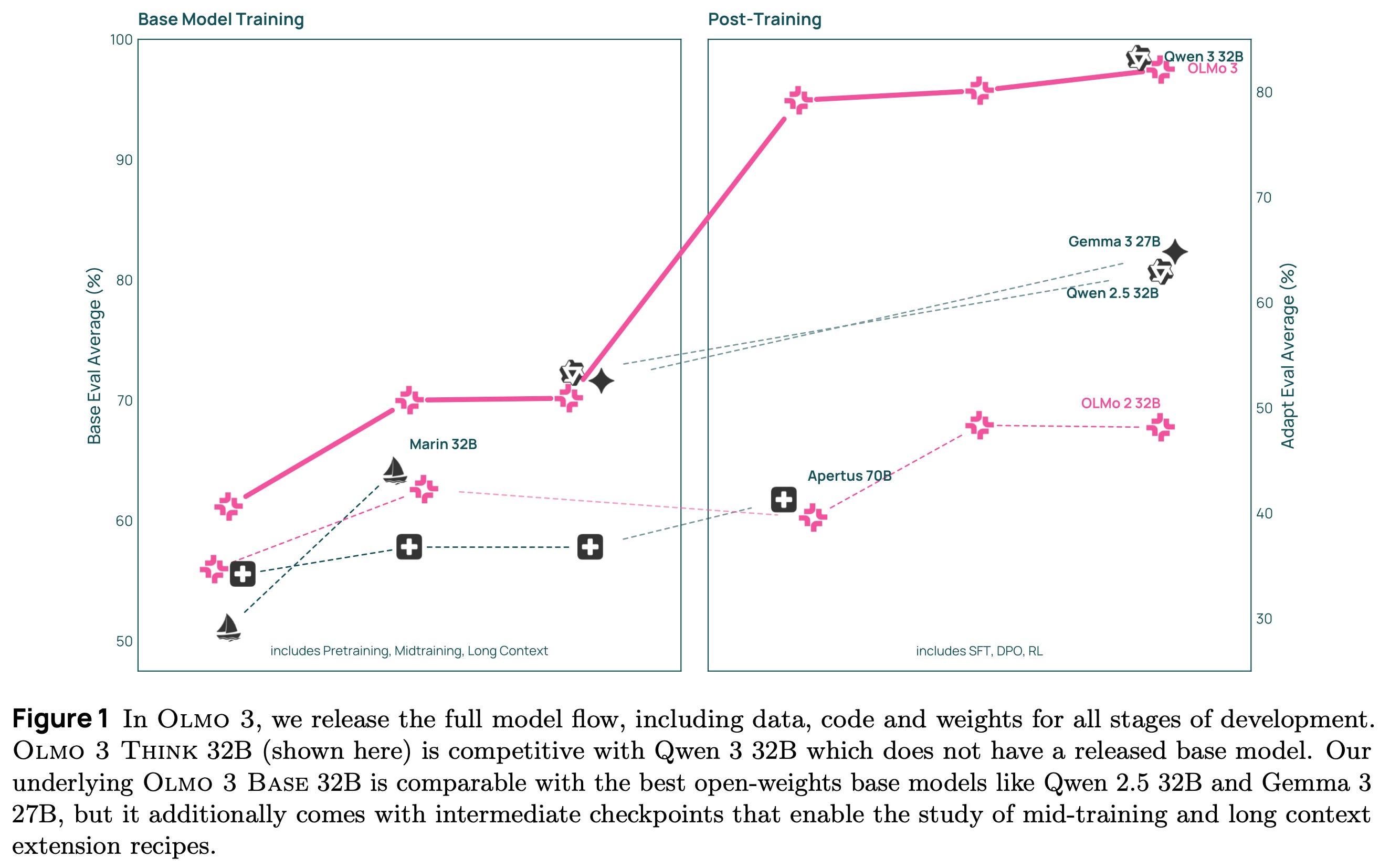
The Allen Institute has released Olmo 3, a new generation of open-source artificial intelligence models aimed at advancing reasoning capabilities and democratizing access to large language models. This release represents a significant milestone in the ongoing effort to make cutting-edge AI technology accessible to researchers, developers, and organizations worldwide.
What Is Olmo 3?
Olmo 3 builds on the foundation of previous Olmo models, introducing enhanced reasoning capabilities that enable more sophisticated problem-solving and analytical tasks. The models are designed with transparency and openness at their core, allowing researchers to inspect, modify, and build upon the architecture without proprietary restrictions.
The release includes multiple model variants, enabling developers to select configurations that best match their computational resources and use-case requirements. This tiered approach democratizes access, allowing both well-resourced organizations and smaller teams to leverage state-of-the-art reasoning models.
Key Technical Improvements
The Olmo 3 series demonstrates measurable improvements across several dimensions:
- Reasoning Performance: Enhanced capabilities for complex logical tasks and multi-step problem solving
- Transparency: Full access to model weights, training data, and architectural specifications
- Scalability: Multiple model sizes to accommodate diverse deployment scenarios
- Open Architecture: Detailed documentation enabling community contributions and modifications
The models incorporate lessons learned from the broader open-source LLM community, including insights from the Dolma dataset initiative and previous Olmo iterations. This iterative approach reflects the collaborative nature of open-source AI development.
Implications for the AI Ecosystem
The release of Olmo 3 carries several important implications for researchers and practitioners:
Accessibility and Democratization: By releasing models under open-source licenses, the Allen Institute removes barriers to entry for organizations that cannot afford proprietary AI solutions. This enables academic institutions, nonprofits, and smaller companies to participate in AI development.
Research Transparency: Open-source models facilitate reproducible research and enable the scientific community to validate claims about model capabilities and limitations. Researchers can examine training procedures, data composition, and architectural decisions directly.
Community-Driven Development: Open-source releases invite contributions from the broader AI community. Developers can identify improvements, propose modifications, and build specialized variants for specific domains or applications.
Competitive Pressure: The availability of high-quality open-source models encourages innovation across the industry and provides a benchmark against which proprietary solutions are measured.
Technical Architecture and Design Philosophy
Olmo 3 reflects a design philosophy emphasizing interpretability and control. The models are built with attention to architectural clarity, enabling researchers to understand how information flows through the system. This contrasts with some proprietary approaches that prioritize performance metrics while maintaining opaque internal structures.
The training methodology incorporates diverse data sources and explicit consideration of bias mitigation. Documentation of training procedures allows researchers to understand potential limitations and appropriate use cases for each model variant.
Looking Forward
The release of Olmo 3 positions the Allen Institute as a key contributor to the open-source AI infrastructure. As the field continues to evolve, models like Olmo 3 provide essential reference implementations and research platforms for advancing AI capabilities responsibly.
The availability of reasoning-focused open-source models may accelerate development in areas including scientific discovery, educational applications, and complex problem-solving tasks where interpretability and transparency are particularly valuable.
Key Sources
- Allen Institute AI research initiatives and Olmo model documentation
- Open-source AI community discussions on model architecture and training methodologies
- Comparative analyses of open versus proprietary language model approaches


