
Bernie Sanders Warns Congress on AI's Worker Impact
Senator Bernie Sanders warns Congress about AI's risks to workers and humanity, urging regulatory pauses and protections amid rapid advancements.
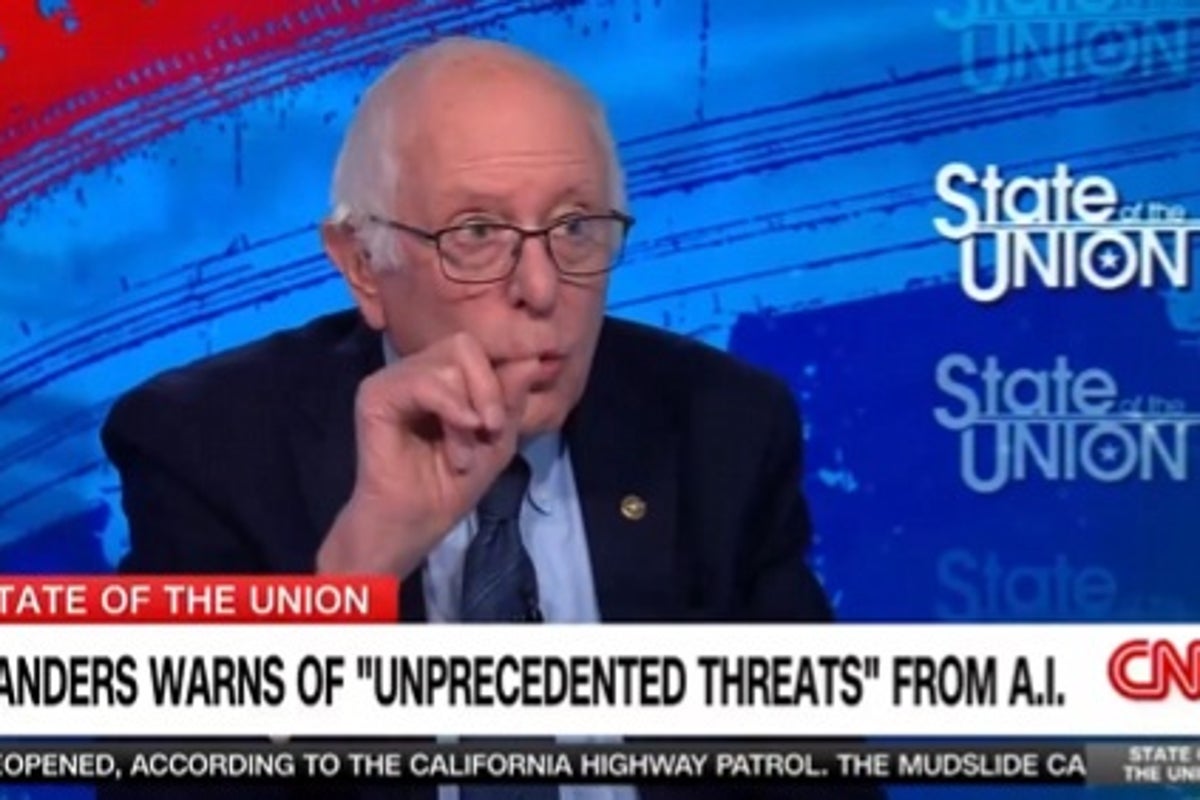
Bernie Sanders Warns of AI's Existential Threat to Workers and Humanity
Senator Bernie Sanders, the independent from Vermont, has issued a stark warning about artificial intelligence (AI), labeling it "the most consequential technology in humanity" and urging an immediate slowdown in its unchecked development. In recent interviews and statements, Sanders criticized Congress for ignoring AI's profound risks to American workers, society, and even global stability, calling for regulatory pauses amid rapid advancements.
Background on Sanders' AI Critique
Sanders' latest remarks stem from a series of high-profile appearances where he addressed AI's explosive growth. On December 28, 2025, in an interview highlighted across major outlets, the 84-year-old senator described AI not just as a job killer but as a force capable of reshaping human existence in unpredictable ways. He pointed to Congress's inaction, stating that lawmakers are "ignoring the threat AI poses to workers and humanity," despite mounting evidence of its disruptive potential.
This builds on Sanders' long history of championing labor rights. As a key figure in progressive politics, he has consistently opposed technologies that exacerbate inequality. In a Fox News segment, Sanders dismissed dismissals of AI doomsday scenarios, arguing that fears of AI "running the world" are far from "science-fiction"—they represent legitimate concerns grounded in current trends. He emphasized how AI's integration into industries like manufacturing, healthcare, and services could displace millions of jobs without adequate safeguards.
Key Concerns Raised by Sanders
Sanders outlined several specific dangers in his critiques:
-
Job Displacement: He warned that AI automation threatens blue-collar and white-collar roles alike, predicting widespread unemployment without retraining programs or worker protections. "Congress is ignoring the threat AI poses to workers," Sanders said, highlighting how tech giants prioritize profits over people.
-
Infrastructure Boom: Beyond software, Sanders targeted the physical expansion of AI, including massive data centers and energy demands. He called for pausing this "rapid growth," questioning, "What are they thinking?" as these facilities strain resources and benefit only corporations.
-
Societal and Existential Risks: Echoing broader debates, Sanders elevated AI to humanity's most pivotal invention, surpassing nuclear power or the internet. He argued that without democratic oversight, AI could concentrate power in unaccountable hands, leading to surveillance states or autonomous weapons.
These points align with Sanders' recent legislative pushes, including bills for AI impact assessments and union rights in tech sectors. His rhetoric has gained traction amid 2025's AI surge, with tools like advanced language models and robotics displacing over 2 million U.S. jobs annually, per labor reports.
Broader Context and Industry Reactions
Sanders' intervention arrives at a pivotal moment for AI. In 2025, investments in the sector topped $500 billion globally, driven by companies like OpenAI, Google, and xAI. Yet, public unease grows: polls show 60% of Americans fear AI job losses, while ethicists warn of "existential risks" like superintelligent systems outpacing human control.
Tech leaders have pushed back. Elon Musk, once an AI skeptic, now champions regulated advancement through xAI, while OpenAI's Sam Altman advocates "responsible scaling." Sanders, however, views these as insufficient, demanding federal moratoriums similar to those proposed for nuclear tech in the 20th century.
Internationally, the EU's AI Act enforces strict rules, contrasting U.S. laissez-faire approaches. Sanders' call resonates with global labor movements, from European strikes against AI hiring tools to Asian protests over factory bots.
Policy Proposals and Political Implications
Sanders proposes concrete actions:
- Immediate Pause: Halt new AI infrastructure projects until impact studies are complete.
- Worker Protections: Mandate severance, retraining, and universal basic income pilots for AI-displaced workers.
- Regulatory Framework: Create a federal AI oversight board with labor representation.
- Tax Reforms: Impose windfall taxes on AI profits to fund social safety nets.
These ideas could influence the incoming 2026 Congress, where Democrats eye AI as a midterm wedge issue. Critics, including Republicans, accuse Sanders of Luddite fearmongering, arguing AI boosts productivity—U.S. GDP grew 3.2% in 2025 partly due to tech efficiencies.
Yet Sanders' warnings carry weight. A 2025 MIT study corroborates his job loss projections, estimating 40% of tasks automatable by 2030. His Guardian-cited phrase, "the most consequential technology in humanity," frames AI as a double-edged sword: immense promise if democratized, catastrophe if not.
Industry Impact and Future Outlook
Sanders' critique spotlights tensions in America's tech economy. AI firms face scrutiny over energy use—data centers now consume 8% of U.S. electricity—and ethical lapses, like biased algorithms in hiring. Labor unions, emboldened, demand seats at AI development tables.
Long-term, Sanders pushes for a "human-centered" AI era, where innovation serves the 99% rather than billionaires. As debates intensify ahead of 2026 elections, his voice amplifies calls for balance: unleash AI's potential without sacrificing humanity's core values.
This moment underscores a broader reckoning. With AI evolving weekly—from multimodal models to robotic swarms—Sanders' urgent plea challenges policymakers: regulate now, or risk irreversible harm. His words, delivered with characteristic fire, may yet spark the oversight America needs.


