
Beyond Earth: How Tech Giants Are Building Data Centers in Space and Underwater
As artificial intelligence demand skyrockets, major technology companies are exploring unconventional locations for data centers—from orbital platforms to the ocean floor—to meet computational needs and reduce environmental impact.
The Race for Alternative Data Center Infrastructure
The explosive growth of artificial intelligence applications has created an unprecedented demand for computational power. Major technology companies—including Microsoft, Google, and Amazon—are now exploring radical solutions to traditional data center constraints. Rather than continuing to build massive facilities on land, these firms are investigating space-based platforms and underwater installations as viable alternatives to meet surging AI infrastructure requirements.
This shift represents a fundamental rethinking of how the tech industry approaches data storage and processing. Traditional data centers consume enormous amounts of electricity and water for cooling, creating both operational costs and environmental concerns. As AI workloads intensify, companies are running up against physical and regulatory limitations of terrestrial infrastructure.
Microsoft's Underwater Datacenter Initiative
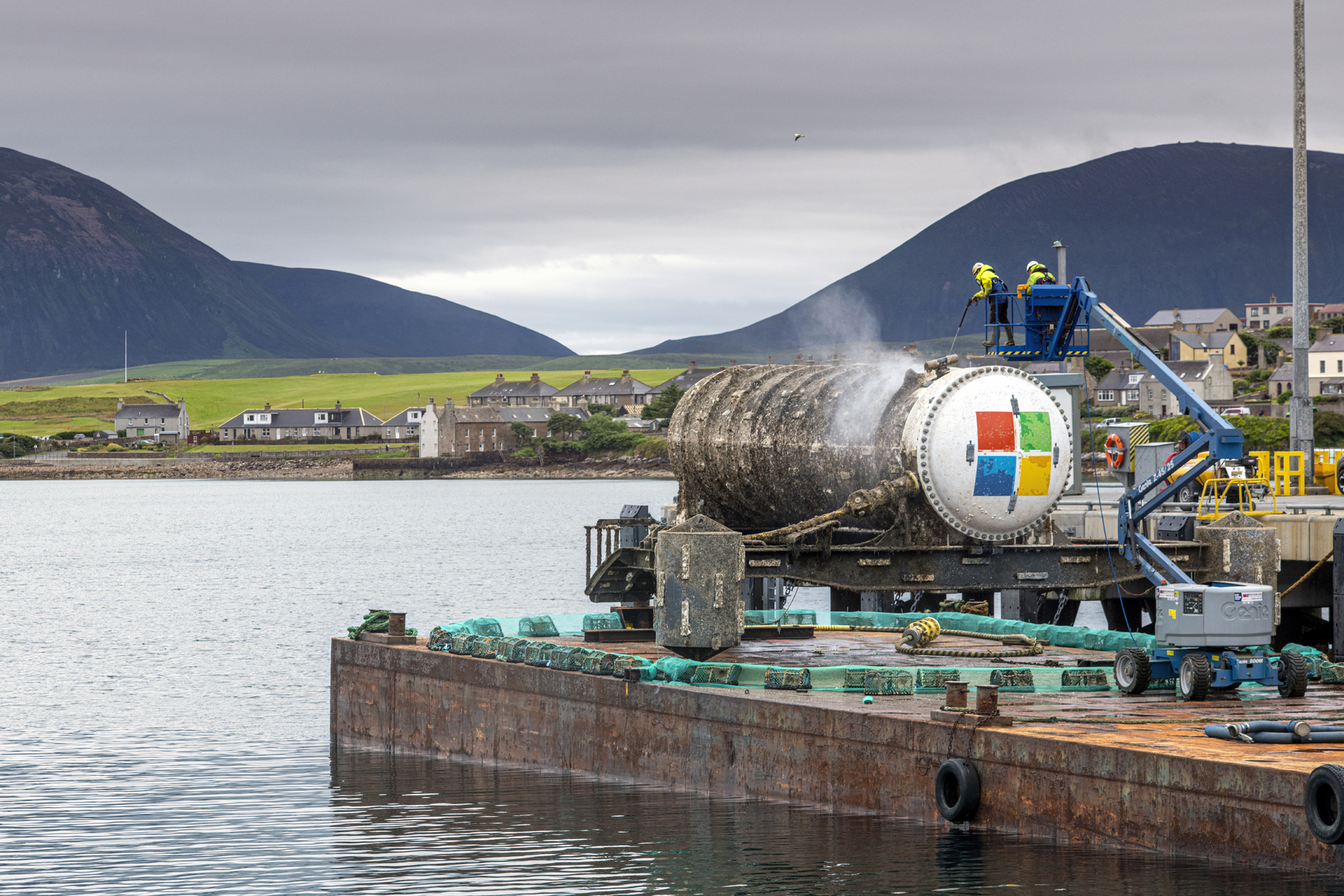
Microsoft has emerged as a pioneer in alternative datacenter deployment through Project Natick, its underwater datacenter program. The company has successfully tested sealed, self-contained datacenters positioned on the ocean floor, demonstrating that underwater environments offer distinct operational advantages.
Key findings from Project Natick include:
- Cooling efficiency: Ocean water provides natural cooling, dramatically reducing the energy required for temperature management
- Reliability: Sealed underwater units have demonstrated lower failure rates compared to traditional land-based facilities
- Space optimization: Underwater deployment eliminates geographical constraints that limit terrestrial expansion
- Latency reduction: Proximity to coastal population centers can improve data delivery speeds for regional users
The project has validated that underwater datacenters can operate reliably for extended periods, addressing initial skepticism about the viability of submerged infrastructure.
Space-Based Data Centers: The Next Frontier
Beyond underwater initiatives, technology companies are now seriously evaluating orbital data centers as a long-term solution. Space-based infrastructure would offer several theoretical advantages:
- Unlimited expansion potential without terrestrial land constraints
- Natural cooling through the vacuum of space
- Reduced latency for global data distribution through orbital positioning
- Independence from terrestrial power grids through solar energy systems
However, space-based datacenters remain largely conceptual. Technical challenges include satellite reliability, power generation and storage, data transmission bandwidth, and the extraordinary costs of launching and maintaining orbital infrastructure. Several startups and established aerospace companies are beginning feasibility studies, but widespread deployment remains years away.
The AI Imperative Driving Innovation
The acceleration of AI adoption across industries has created urgency around datacenter capacity. Large language models, machine learning training, and real-time AI inference require massive computational resources. Traditional datacenter expansion cannot keep pace with demand growth, forcing companies to explore unconventional solutions.
This infrastructure race has become strategically critical. Companies that secure adequate computational capacity will maintain competitive advantages in AI development and deployment. Conversely, those facing capacity constraints risk falling behind in the AI arms race.
Environmental and Economic Considerations
Alternative datacenter locations address both economic and environmental pressures. Underwater facilities reduce cooling costs—often representing 30-40% of operational expenses in traditional datacenters. Space-based infrastructure could theoretically eliminate cooling requirements entirely while reducing terrestrial environmental impact.
However, these solutions introduce new environmental considerations. Underwater installations require careful environmental monitoring to ensure marine ecosystem protection. Space-based systems raise questions about orbital debris and long-term sustainability of orbital infrastructure.
Key Sources
- Microsoft Project Natick research documentation on underwater datacenter deployment
- Industry analysis on AI infrastructure capacity requirements and constraints
- Aerospace and satellite technology assessments for orbital datacenter feasibility
The convergence of AI demand, environmental concerns, and technological innovation is reshaping datacenter infrastructure strategy. Whether through underwater platforms or eventual space-based systems, the next generation of computational infrastructure will likely look radically different from today's terrestrial facilities.


