
ChatGPT Surpasses 700 Million Weekly Users in 2025
ChatGPT reaches over 700 million weekly users in 2025, transforming digital interaction and impacting industries globally.
ChatGPT in 2025: The AI Chatbot Transforming Digital Interaction Worldwide
ChatGPT, the AI-powered chatbot developed by OpenAI, remains a transformative force in global technology and daily digital communication in 2025. With over 700 million active weekly users as of mid-2025 and an estimated 2.5 billion prompts processed daily, ChatGPT has redefined how people access information, interact with AI, and utilize generative technologies across industries. This article explores the latest developments, user statistics, industry impact, and challenges surrounding ChatGPT as it continues to evolve three years after its launch.
Explosive Growth and User Demographics
Since its debut in late 2022, ChatGPT's growth trajectory has been nothing short of meteoric. It reached:
- 1 million users within 5 days of launch
- 100 million users by November 2023
- 400 million weekly users by February 2025
- Between 700 and 800 million weekly users by October 2025
This rapid adoption underscores ChatGPT’s global popularity. Remarkably, more than 45% of ChatGPT users are under the age of 25, highlighting its appeal among younger generations who are digital natives. The platform sees approximately 4.6 billion site visits monthly, with about 62% of its social media traffic stemming from YouTube, showcasing the platform’s integration into educational and entertainment ecosystems.
Mobile adoption is also significant. By September 2024, the ChatGPT app had registered over 32 million downloads worldwide on both Apple App Store and Google Play, outpacing competitors like Google’s Gemini AI Assistant. Despite a slight slowdown in subscription growth in 2025, the overall user base continues to expand, signaling sustained interest.
Industry Adoption and Economic Impact
ChatGPT’s influence extends far beyond casual conversation. Various sectors are leveraging the AI chatbot to enhance customer engagement, streamline workflows, and optimize purchasing decisions. According to research compiled in late 2025, industries integrating ChatGPT into their customer journeys include:
| Industry | % Customers Using ChatGPT | Estimated Financial Impact (USD) |
|---|---|---|
| Travel & Hospitality | 18% | $1.48 trillion |
| Retail & Consumer Goods | 16% | $1.11 trillion |
| IT Services | 14% | $936 billion |
| Lifestyle, Health & Wellness | 13% | $891 billion |
| Food & Beverage | 13% | $546 billion |
| Healthcare | 11% | $378 billion |
These figures illustrate ChatGPT’s role as a catalyst for multi-trillion-dollar economic activity, enabling smarter purchasing decisions and personalized customer service at scale.
The “ChatGPT Effect” on Information Seeking and Communication
ChatGPT has profoundly changed how people search for and absorb information. Traditional search engines are increasingly supplemented or replaced by conversational AI, which provides synthesized, context-aware responses rather than links or raw data. However, this shift has prompted some concerns:
- Information Overload and Quality: A Washington Post analysis indicates that users might be "talking too much" to AI, receiving questionable or inconsistent advice from large language models (LLMs) like ChatGPT.
- Discoverability and Privacy: Conversations with AI chatbots could be discoverable or stored, raising privacy and data protection questions.
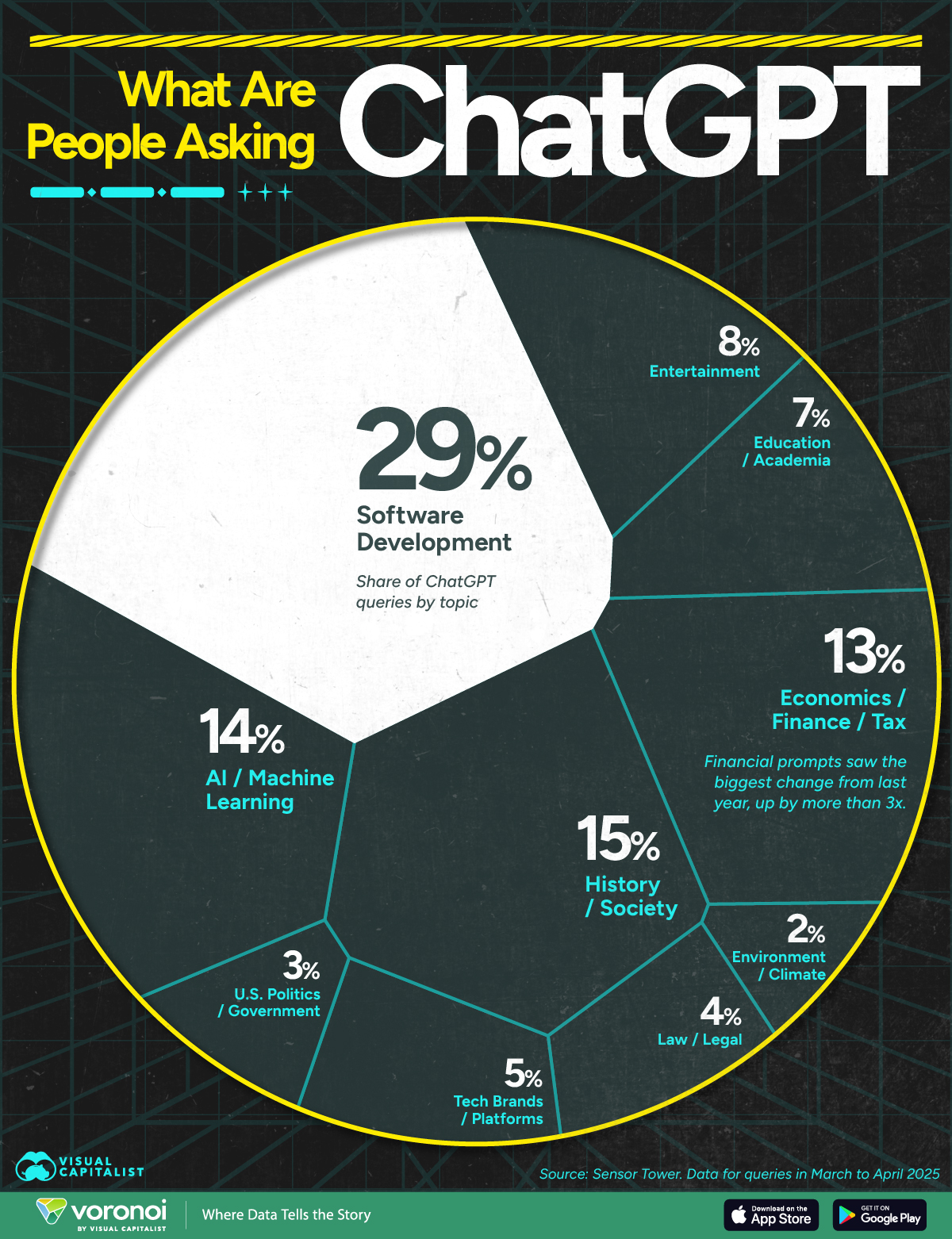
Despite these challenges, the AI chatbot has become a trusted tool for millions, influencing educational methods, coding assistance, content creation, and more.
Technological Advances and Competition
OpenAI continues to innovate ChatGPT’s capabilities, integrating advanced features such as:
- Multimodal input (text, images, code)
- Enhanced contextual understanding
- Real-time data integration (in paid tiers)
These improvements aim to maintain ChatGPT’s competitive edge amid a growing AI arms race, with rivals like Google’s Gemini AI and other generative AI platforms vying for dominance.
Challenges and Future Outlook
While ChatGPT’s user base and applications grow, challenges remain:
- Misinformation and Bias: Ensuring AI responses are factual and unbiased is an ongoing priority.
- Subscription Monetization: Although user numbers rise, paid subscription growth has plateaued, prompting OpenAI to explore new revenue streams.
- Ethical Use and Regulation: The expansive use of AI chatbots raises regulatory and ethical questions about transparency, accountability, and societal impact.
Looking ahead, OpenAI aims to reach 1 billion users by the end of 2025, reflecting both the platform’s potential and the broader trend of AI becoming embedded in everyday life. The coming years will likely see ChatGPT evolve from a tool for conversation to an indispensable assistant across personal, professional, and commercial domains.
Visual Highlights
- ChatGPT Interface Screenshot: Demonstrates the text-based conversational UI that millions interact with daily.
- OpenAI Logo: Represents the organization behind ChatGPT’s development and innovation.
- Growth Chart: Depicts the exponential increase in ChatGPT users from launch through 2025.
- Industry Impact Infographic: Visualizes economic sectors most influenced by ChatGPT adoption.
ChatGPT’s journey from a novel chatbot to a global AI phenomenon illustrates the profound shift in human-computer interaction technology. As it continues to refine its intelligence and expand its reach, ChatGPT stands as a defining example of how artificial intelligence is reshaping the digital landscape in the mid-2020s.


