
Google, Nvidia, and OpenAI Shape AI Industry in 2025
Google, Nvidia, and OpenAI lead AI industry in 2025 with unique strategies in software, hardware, and infrastructure, impacting future tech dynamics.
Google, Nvidia, and OpenAI: The New Triumvirate Shaping the AI Industry in 2025
The AI landscape in 2025 is defined by the intense interplay between three giants: Google, Nvidia, and OpenAI. Each company is leveraging its unique strengths in software, hardware, and infrastructure to vie for dominance in artificial intelligence development, deployment, and innovation. Their strategies reveal a complex ecosystem where specialized chips, advanced AI models, and vast cloud infrastructure investments converge, profoundly impacting the future of AI technology and the broader tech industry.
The Players and Their Strategies
Nvidia: The GPU Powerhouse with a Massive AI Bet
Nvidia remains the leading supplier of AI hardware, commanding about 90% of the AI chip market with its highly versatile GPUs. Its Blackwell and Vera Rubin GPUs represent the cutting edge in AI-specific hardware, delivering immense computational power and flexibility across diverse AI workloads. Nvidia’s GPUs are prized for their general-purpose nature, enabling compatibility with various AI frameworks and software stacks, a key advantage over more specialized hardware alternatives.
In 2025, Nvidia has deepened its financial and strategic ties with OpenAI through an investment of up to $100 billion for non-voting shares, alongside a commitment from OpenAI to deploy at least 10 gigawatts of Nvidia chips across AI data centers starting in the second half of 2026. This partnership underscores Nvidia’s central role in powering OpenAI’s large-scale model training and inference.
However, Nvidia faces growing pressure to justify its sky-high margins and long-term growth prospects as competitors develop alternative hardware. Its CUDA software platform remains a critical lock-in mechanism, attracting a vast developer ecosystem and making Nvidia chips the natural choice for AI researchers and engineers. Yet, there is increasing scrutiny on whether this dominance can withstand rising hardware specialization and new chip architectures.
Google: Challenging the Status Quo with Gemini and TPUs
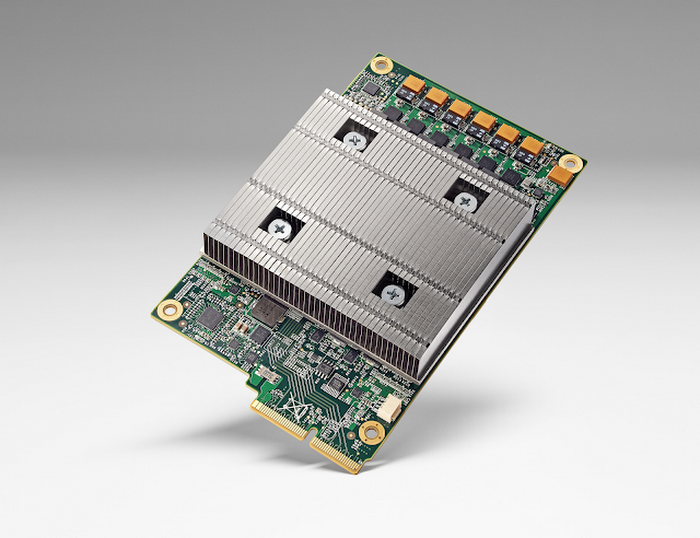
Google is taking a full-stack approach to AI, integrating its own Tensor Processing Units (TPUs)—specialized AI chips designed for efficient tensor computation—with advanced AI models in its Gemini series. Google's Gemini 3 Pro model recently surpassed OpenAI’s offerings in global rankings, signaling a major leap in AI capabilities.
Unlike Nvidia’s general-purpose GPUs, Google’s TPUs are optimized for specific AI workloads, offering superior energy efficiency and cost-effectiveness. This hardware-software synergy provides Google with a competitive edge, particularly in large-scale AI training and inference. Google's TPUs have attracted interest from major AI users, including Meta, which is reportedly in talks to deploy TPUs in its own data centers—potentially shifting some GPU demand away from Nvidia.
Google’s methodical deployment of Mixture of Experts (MoE) architecture further enhances training efficiency, positioning it as a formidable contender in AI infrastructure. This integrated model challenges OpenAI’s more ambitious but fragmented approach, which involves launching diverse products and partnering with multiple tech giants.
OpenAI: The AI Startup with Monumental Ambitions and Costs
OpenAI, the startup that revolutionized AI with ChatGPT, is now the focal point of the largest infrastructure spending plans ever seen in the industry. From 2025 to 2035, OpenAI plans to spend over $1.09 trillion on infrastructure, spreading investments across cloud services and hardware providers including Microsoft Azure ($250 billion), Nvidia ($100 billion), AMD ($90 billion), and Amazon AWS ($38 billion).
Despite this massive capital outlay, OpenAI faces challenges. It is currently operating at a loss, stretched thin as it scales up compute requirements and expands its product portfolio rapidly. The startup’s heavy reliance on Nvidia GPUs for its base AI models places it at the mercy of Nvidia’s hardware roadmap, especially as Nvidia’s next-generation chips (Blackwell and Vera Rubin) become pivotal for OpenAI’s future model pre-training.
Analysts caution that OpenAI’s broad ambitions may lead to fragmentation and diluted focus, contrasting with Google’s more integrated approach. Yet, OpenAI’s partnership network and cloud contracts with Microsoft and others provide it with significant operational scale and market reach.
Industry Implications and Competitive Dynamics
The competition between these three companies illustrates a broader industry tension:
-
Hardware specialization vs. flexibility: Nvidia’s GPUs offer unmatched versatility, favored by many hyperscalers and developers. Google’s TPUs trade off some flexibility for efficiency and cost advantages in specific AI tasks.
-
Software ecosystems: Nvidia’s CUDA creates a strong developer lock-in, but Google’s vertically integrated stack (hardware + software + AI models) could erode this advantage over time.
-
Capital intensity: OpenAI’s enormous infrastructure spending signals how resource-intensive cutting-edge AI development has become, raising questions about sustainability and profitability.
The strategic partnerships also highlight the interdependence of these companies. Nvidia’s hardware powers OpenAI’s cutting-edge models, while Google pushes forward with proprietary hardware and AI models that challenge both Nvidia’s and OpenAI’s dominance.
Visualizing the AI Hardware-Software Ecosystem
Below are relevant images illustrating this landscape:
- Nvidia’s Blackwell GPU: The latest AI-focused GPU powering OpenAI’s next model training.
- Google’s TPU chip: Specialized AI accelerator enabling Google’s Gemini models.
- OpenAI CEO Sam Altman: Leading the startup’s aggressive infrastructure expansion.
- Gemini 3 Pro AI model demo: Showcasing Google's AI advancements challenging OpenAI.
Conclusion
In 2025, the battle for AI supremacy is not just about software innovation but also about hardware dominance and infrastructure scale. Nvidia, Google, and OpenAI each bring distinct strengths: Nvidia’s versatile GPUs and developer ecosystem, Google’s integrated TPU-powered AI stack, and OpenAI’s ambitious model development fueled by unprecedented cloud and hardware investments.
How this competition unfolds will shape not only the future of AI technologies but also the economic dynamics of the entire tech industry, from cloud providers to enterprise software users. The next few years will be critical in determining whether flexibility or specialization, startup agility or integrated scale, will define AI leadership going forward.


