
Kandinsky 5.0: Russia's Advanced Foundation Models for Image and Video Generation
Kandinsky 5.0 represents a significant advancement in generative AI, introducing a family of foundation models designed to push the boundaries of image and video generation capabilities with improved quality and efficiency.
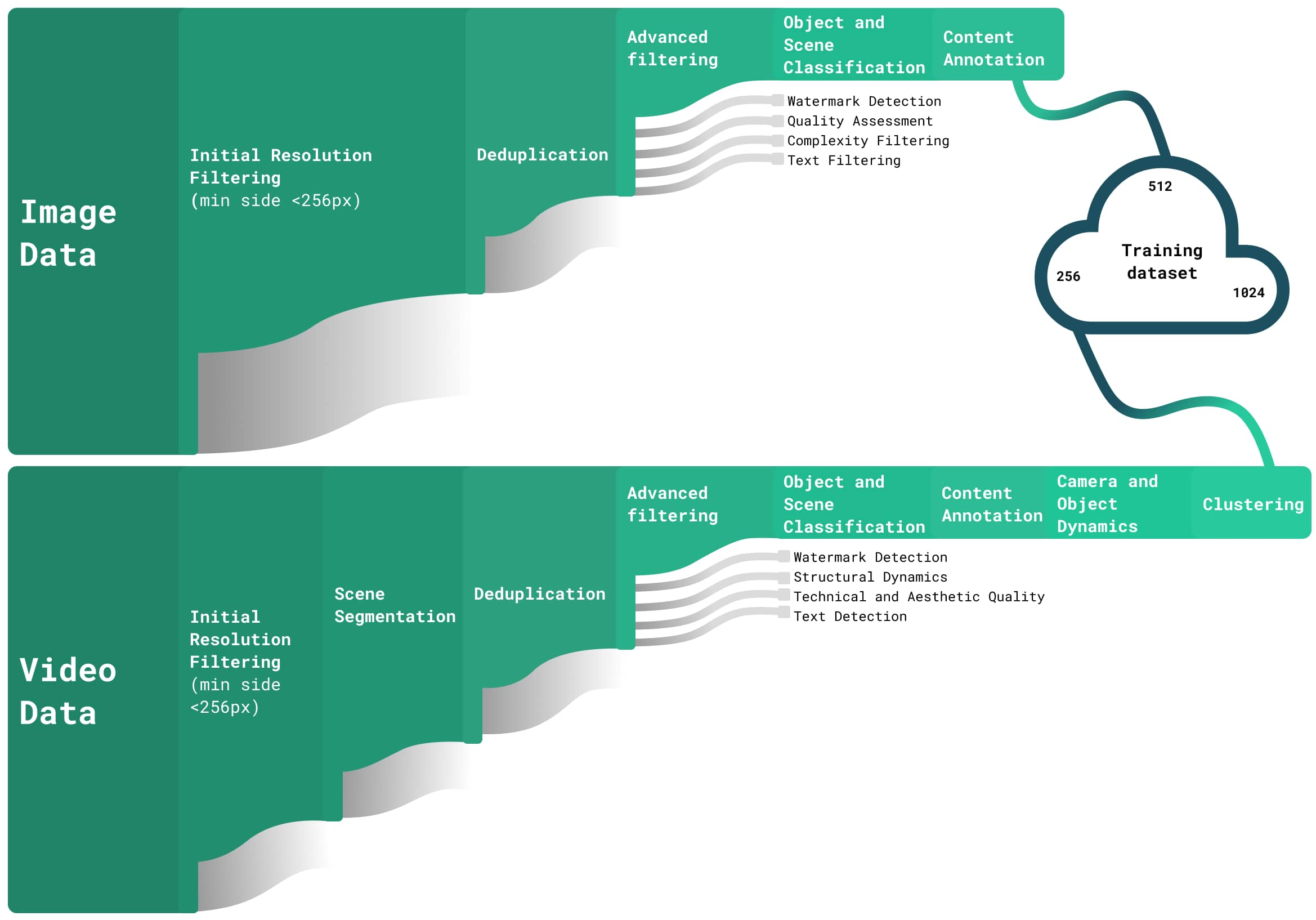
Kandinsky 5.0: Russia's Advanced Foundation Models for Image and Video Generation
Kandinsky 5.0 marks a substantial evolution in open-source generative AI, introducing a comprehensive family of foundation models specifically engineered to advance both image and video generation. The project demonstrates how modular, scalable architectures can deliver competitive performance in visual synthesis while maintaining accessibility for researchers and developers worldwide.
Architecture and Model Family
The Kandinsky 5.0 framework comprises multiple specialized models designed to handle different aspects of visual generation. Rather than relying on a single monolithic approach, the architecture employs a family-based structure that allows for flexible deployment across varying computational resources and use cases.
The models leverage diffusion-based approaches combined with advanced conditioning mechanisms to achieve high-fidelity outputs. This design philosophy enables both text-to-image and image-to-video capabilities, positioning Kandinsky 5.0 as a versatile tool for comprehensive visual content creation workflows.
Key Technical Capabilities
Image Generation: The foundation models support sophisticated text-to-image synthesis with improved semantic understanding and visual coherence. The architecture incorporates refined attention mechanisms and conditioning strategies that enhance alignment between textual prompts and generated outputs.
Video Generation: Building on image generation capabilities, Kandinsky 5.0 extends into temporal domain synthesis, enabling frame-by-frame video generation with maintained consistency across sequences. This represents a critical advancement for practical video creation applications.
Efficiency Improvements: The model family demonstrates optimized computational performance, reducing inference latency while maintaining output quality. This efficiency gain is particularly significant for deployment in resource-constrained environments.
Training and Optimization
The development process incorporates supervised fine-tuning workflows designed to enhance model alignment and output quality. The training pipeline emphasizes both technical performance metrics and practical usability considerations, ensuring models perform well across diverse real-world applications.
The framework supports iterative refinement through structured feedback mechanisms, allowing continuous improvement of generation quality and consistency.
Practical Applications
Kandinsky 5.0's capabilities extend across multiple domains:
- Creative Industries: Content creators can leverage the models for rapid prototyping and asset generation
- Research Applications: Academic institutions benefit from open-source access to state-of-the-art generative models
- Commercial Development: Developers can integrate the models into production systems with clear licensing frameworks
- Educational Use: The transparent architecture facilitates learning and experimentation with modern generative AI techniques
Open-Source Accessibility
A defining characteristic of Kandinsky 5.0 is its commitment to open-source distribution. By making foundation models publicly available, the project democratizes access to advanced generative capabilities and encourages community-driven innovation and improvement.
This approach contrasts with proprietary models and reflects a philosophy prioritizing transparency and collaborative development. Researchers and practitioners can examine model architectures, training methodologies, and implementation details directly.
Performance Benchmarking
The model family demonstrates competitive performance across standard evaluation metrics for image generation quality, semantic alignment, and temporal consistency in video synthesis. Comparative analysis with other foundation models shows Kandinsky 5.0 achieving strong results while maintaining computational efficiency advantages.
Future Directions
The Kandinsky 5.0 framework establishes a foundation for continued advancement in generative AI. Potential development areas include enhanced video generation capabilities, improved multi-modal conditioning, and expanded model scaling options.
The modular architecture enables incremental improvements and specialization, allowing the community to develop domain-specific variants optimized for particular applications or industries.
Key Sources
- Kandinsky 5.0 GitHub Repository: Official project documentation and model releases
- Foundation Model Architecture Documentation: Technical specifications and training methodologies
- Community Research Contributions: Peer-reviewed analyses of model capabilities and performance characteristics
The release of Kandinsky 5.0 represents meaningful progress in democratizing advanced generative AI capabilities, offering researchers and developers powerful tools for visual content creation while maintaining transparency and accessibility standards.


