
Navigating AI's Dual Role: Economic Power and Market Bubble
AI is reshaping the economy with its transformative potential, yet the current investment surge may resemble a bubble, posing risks alongside opportunities.
Navigating AI's Dual Role: Economic Power and Market Bubble
Artificial intelligence (AI) is a transformative force reshaping the global economy. Despite its potential to enhance productivity, create new industries, and revolutionize existing sectors, experts warn that the current surge in AI investment may resemble a bubble — a market phenomenon characterized by excessive enthusiasm that can lead to sharp corrections. This duality highlights that AI’s ability to change economies does not preclude speculative excess.
The AI Economic Boom: Transformative Potential
AI technologies — including machine learning, natural language processing, robotics, and generative AI — are rapidly permeating multiple economic sectors. From improving healthcare diagnostics and automating manufacturing to enhancing financial services and enabling smarter logistics, AI is driving productivity gains and innovation.
- Productivity Gains: According to McKinsey Global Institute, AI could potentially add $13 trillion to the global economy by 2030, increasing global GDP by about 1.2% annually.
- New Markets and Jobs: AI is expected to create new job categories while augmenting existing roles, changing the nature of work with a focus on higher-value tasks.
- Industry Disruption: Companies leveraging AI for automation and data-driven decision-making are gaining competitive advantages, forcing traditional businesses to adapt or risk obsolescence.
The Bubble Concern: Speculation and Overvaluation
Despite these promising developments, the explosive growth in AI startups, venture capital inflows, and soaring stock valuations of AI-focused companies have raised alarms about a potential bubble. This phenomenon is reminiscent of past tech booms where enthusiasm outpaced sustainable fundamentals.
- Venture Capital Surge: AI startups attracted record funding, with global investment exceeding $100 billion in 2024 alone, a steep increase compared to previous years.
- Public Market Volatility: Shares of AI-centric firms have experienced wild price swings, driven more by hype than earnings performance.
- Speculative Behavior: Retail investors and institutional funds alike are chasing “AI plays,” sometimes without thorough due diligence on business viability.
Prominent economists and market strategists caution that while AI’s long-term impact is real, the short-term financial frenzy could lead to a market correction if expectations are not met promptly.
Why the Paradox Exists: Transformation vs. Bubble
The coexistence of transformative potential and bubble risks arises from the nature of technological revolutions. Breakthrough technologies often undergo phases of inflated expectations before settling into productive maturity.
- Innovation Adoption Cycles: Early excitement can lead to overspending and overhiring, creating unsustainable valuations.
- Unclear ROI Timelines: AI’s benefits, though significant, often require years to materialize fully, causing impatience among investors.
- Media and Public Hype: Extensive media coverage and fear of missing out (FOMO) amplify speculative investment waves.
Bloomberg’s analysis emphasizes that recognizing the bubble risk does not diminish AI’s profound economic impact but rather serves as a cautionary note for prudent investment.
Industry and Policy Implications
For businesses, balancing AI investments with realistic expectations is crucial. Overcommitting to unproven AI ventures can lead to losses, while underinvesting could result in missed opportunities.
- Strategic Investment: Firms should focus on AI applications that show clear cost savings or revenue growth.
- Workforce Adaptation: Preparing employees for AI integration through reskilling is essential for sustainable growth.
- Regulatory Oversight: Governments need to monitor AI’s economic effects and implement policies that foster innovation while mitigating systemic risks.
Looking Ahead: Sustainable AI Growth
Despite the bubble concerns, the consensus among experts is that AI’s transformative effect on the economy is inevitable and will likely unfold over the next decade. The challenge lies in navigating the current exuberance responsibly.
- Long-Term Vision: Investors and companies should prioritize AI projects with tangible business models.
- Balanced Market Sentiment: A cooling of speculative fervor may lead to a healthier, more sustainable AI ecosystem.
- Technological Maturation: Continued advancements in AI research and infrastructure will underpin lasting productivity gains.
Visual Representation

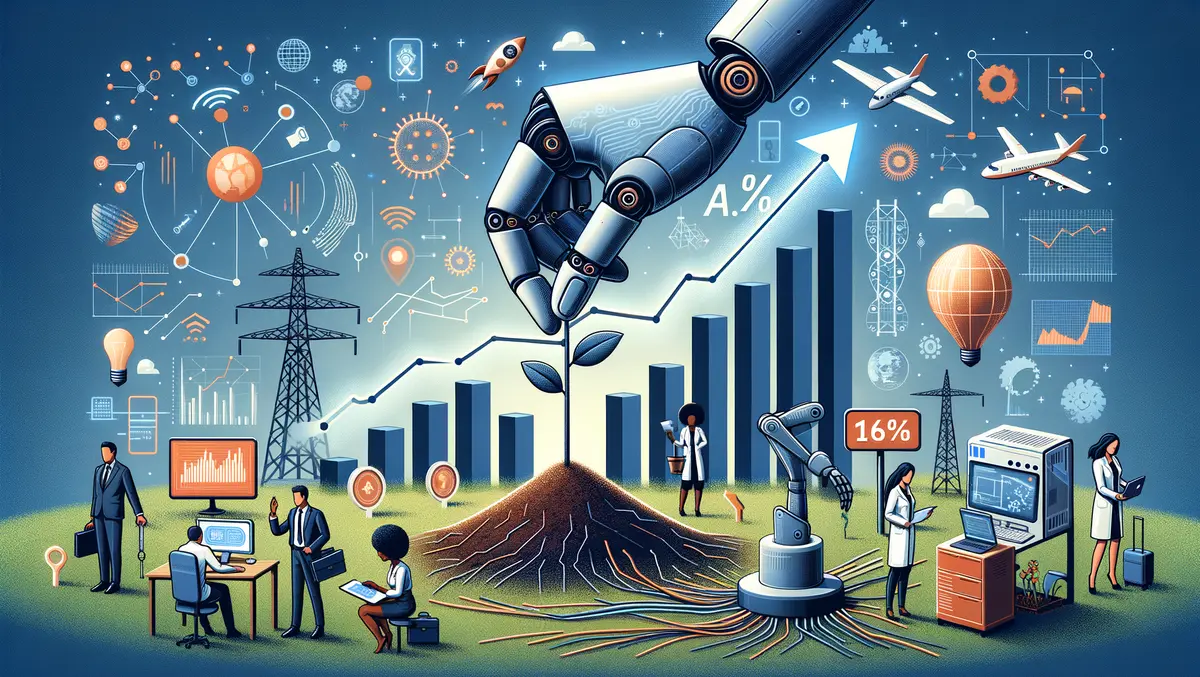
Depiction of AI's integration in various economic sectors illustrating productivity and innovation.

Graph showing the surge in AI startup funding over recent years.
Conclusion
AI stands at the cusp of reshaping the global economic landscape, promising unprecedented growth and innovation. However, the current market exuberance surrounding AI investments exhibits classic signs of a bubble. Understanding this paradox is critical for investors, businesses, and policymakers aiming to harness AI’s benefits without succumbing to speculative pitfalls. As the technology matures, a measured and strategic approach will be key to realizing AI’s transformative potential while maintaining economic stability.


