
Notion Integrates GPT-5 for Autonomous Workspace Transformation
Notion integrates GPT-5 to create autonomous workspaces, transforming productivity with AI-driven features and multi-app integration.
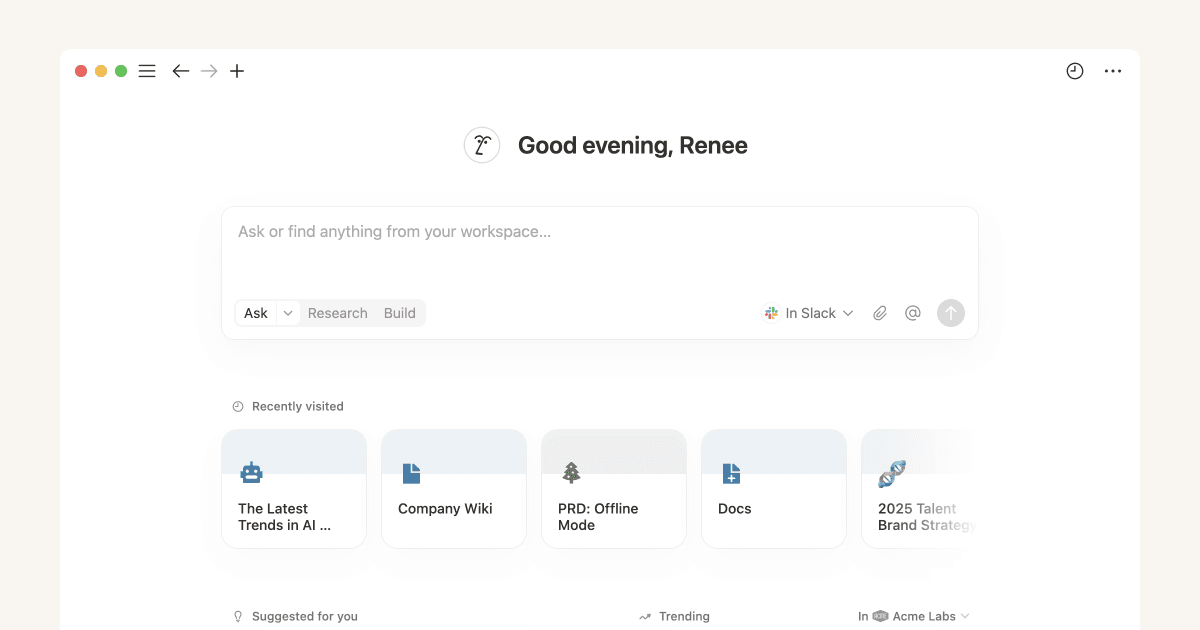
Notion’s Rebuild for Agentic AI: How GPT-5 Powers Autonomous Workspaces
Notion, the popular all-in-one workspace platform, has undergone a fundamental transformation—shifting from a productivity tool with AI features to a natively AI-driven platform where autonomous agents, powered by OpenAI’s GPT-5, can reason, act, and adapt across workflows. This strategic rebuild, detailed in a recent announcement, marks a leap toward intelligent, self-directing productivity tools that promise to redefine how teams and individuals work.
The Evolution of Notion’s AI
Notion’s journey into AI began with incremental features, but the integration of GPT-5 catalyzed a full architectural overhaul. Every core function—search, database creation, meeting notes, and more—now leverages advanced AI models, including GPT-4o, GPT-4o mini, and custom embeddings. The platform’s engineering team, led by Sarah Sachs, developed infrastructure that allows rapid evaluation and deployment of new OpenAI models, ensuring Notion remains at the cutting edge. This tight collaboration with OpenAI has enabled Notion to launch user-facing AI products faster than most competitors, with new models integrated in as little as half a day.
Key to this evolution is the concept of “agentic AI”—AI that doesn’t just respond to commands but proactively navigates, reasons about, and modifies the workspace based on context and user intent. Notion’s agents can now answer natural language questions with citations, summarize documents, analyze attachments, and even connect with external apps like Gmail, Google Calendar, Slack, and Google Drive. Users can interrupt ongoing AI tasks to add context or refine queries, preserving conversation history and reducing friction in complex workflows.
Core Features and User Experience
- Natural Language Q&A: Users can ask questions in plain English across their entire workspace and receive accurate, sourced answers. This feature closes the “search gap” by surfacing relevant information buried in notes, databases, or attached files.
- Context-Aware Agents: Notion AI retains the full context of a conversation, allowing iterative refinement. If a research query needs updating, users can interject new details without losing progress, mirroring human dialogue.
- Multi-App Integration: Notion AI connectors enable seamless collaboration with other productivity tools. Attachments from Google Drive, PDFs, and images can be analyzed and summarized directly within Notion.
- Multi-Agent Workflows: Advanced users can orchestrate multiple AI agents—selecting between GPT-5 and Claude Sonnet 4.5—to navigate, modify, and create pages or databases, with full control over context and data sources.
- Enhanced Database Automations: Notion’s databases now feature robust error handling and improved layouts, making automations more reliable and interfaces cleaner for enterprise use.
Technical Foundations
The backbone of Notion’s agentic AI is a blend of OpenAI’s latest models and Notion’s proprietary retrieval systems. When a user poses a question, the system uses embeddings to understand the query, retrieves relevant content from the workspace, and generates a coherent, cited response using GPT-5. This architecture supports real-time model evaluation, ensuring that performance and capabilities improve continuously as new models are released.
Notion’s engineering team emphasized the reciprocal nature of their partnership with OpenAI. Product feedback from Notion has directly influenced OpenAI’s development of features like reserved capacity and enhanced routing, creating a virtuous cycle of innovation.
Use Cases and Productivity Gains
Organizations and individuals are already leveraging Notion’s agentic AI for:
- Automated Research: Deep, context-preserving research sessions where the AI can pivot based on new information, streamlining literature reviews, competitive analysis, and data synthesis.
- Knowledge Management: Building AI-powered knowledge bases that answer employee questions instantly, reducing time spent searching through documents.
- Cross-Platform Collaboration: Connecting Notion with email, calendar, and chat tools to automate meeting notes, task assignments, and follow-ups.
- Custom Workflows: Power users can design multi-agent systems to handle complex projects, with each agent specialized for different tasks—drafting, summarizing, or analyzing data.
Industry Impact and Future Outlook
Notion’s rebuild positions it as a leader in the next generation of productivity software, where AI is not an add-on but the core driver of user experience. Competitors are now under pressure to match Notion’s level of integration, context-awareness, and automation.
The implications for knowledge work are profound. Teams can offload routine information retrieval, synthesis, and even decision-support to AI agents, freeing human attention for higher-value tasks. As AI models continue to advance, Notion’s architecture ensures it can rapidly adopt new capabilities, maintaining its competitive edge.
Context and Implications
The shift to agentic AI in Notion reflects a broader trend in enterprise software: the move from passive tools to active, intelligent assistants. This transition requires not just advanced AI models but also thoughtful design to preserve user control, transparency, and trust. Notion’s approach—combining state-of-the-art language models with robust retrieval, context preservation, and multi-app integration—sets a high bar for what users should expect from modern productivity platforms.
As organizations increasingly rely on distributed, asynchronous work, tools like Notion that can reason across workflows and adapt to dynamic contexts will become essential. The close collaboration between Notion and OpenAI also highlights the importance of partnerships in driving rapid, user-centric AI innovation.
Visuals and Media
(Note: As an AI text model, I cannot directly embed images, but I can describe relevant visuals you should include and suggest keywords for your editorial team to source.)
- Screenshots of Notion’s AI sidebar showing the model selection (GPT-5, Claude Sonnet), context definition, and attachment handling.
- Demo images of natural language Q&A in action, with citations and source highlighting.
- Workflow diagrams illustrating how Notion AI connects with external apps (Gmail, Slack, Google Drive) for cross-platform automation.
- Headshots of key Notion and OpenAI engineering leads (e.g., Sarah Sachs) involved in the collaboration, if available.
- Before/after comparisons of database automations and list views, showcasing the UI improvements.
Image search keywords: Notion AI workspace, Notion GPT-5 integration, Notion AI agent screenshot, Notion multi-app integration, Notion database automation, Sarah Sachs Notion.
Conclusion
Notion’s rebuild for agentic AI, powered by GPT-5, represents a watershed moment for productivity software. By embedding autonomous, context-aware agents at the core of its platform, Notion has unlocked smarter, faster, and more flexible workflows for millions of users. The technical and collaborative foundations laid here will likely shape the next decade of AI-powered work tools, as the line between human and machine collaboration continues to blur.


