
Nvidia Faces Bullish Forecasts and Risks as 2026 Nears
Nvidia faces bullish forecasts and emerging risks as it approaches 2026, with analysts projecting significant stock upside amid surging AI demand.
Nvidia Stock Faces Bullish Forecasts and Emerging Risks as 2026 Approaches
Nvidia Corporation (NVDA), the dominant force in AI chip technology, enters 2026 with analysts projecting significant stock upside amid surging demand for its graphics processing units (GPUs), though competition and market saturation pose notable risks.[1][2][5] Wall Street consensus points to revenue growth exceeding 48% to $313 billion in fiscal 2027, driven by AI workloads, with price targets ranging from $235 to $352, potentially delivering returns of 33% to 97% from recent levels around $187.[1][2][3]
Analyst Projections Signal Strong Growth Potential
Top analysts remain overwhelmingly bullish on Nvidia's trajectory into 2026, emphasizing its unmatched position in the AI chip market. TipRanks highlights multiple five-star ratings, with one forecast predicting NVDA could hit $352, a 97% increase, based on sustained AI dominance.[2][5] Evercore ISI's Mark Lipacis forecasts an 86% surge, underscoring Nvidia's lead in training and inference chips essential for large language models.[6]
Dan Ives of Wedbush sets a bold $250 base-case target by year-end 2026, implying a 33% gain from $187.67, fueled by underestimated earnings power across the AI stack.[3] Nasdaq analysis echoes this optimism, predicting shares could soar past $300—an 84% to 151% rise—supported by a forward P/E ratio of 24.4, a discount to its 10-year average of 61.2.[1] Wall Street expects fiscal 2027 earnings of $7.46 per share, up 59% year-over-year, with Q3 fiscal 2026 revenue already at a record $57 billion, up 62%.[1][4]
These projections hinge on Nvidia's Blackwell and upcoming Rubin architectures, which address exploding demand from hyperscalers like Microsoft, Amazon, and Google. Only 3% of U.S. companies currently use AI, leaving vast untapped growth as enterprises deploy inference models at scale.[3]

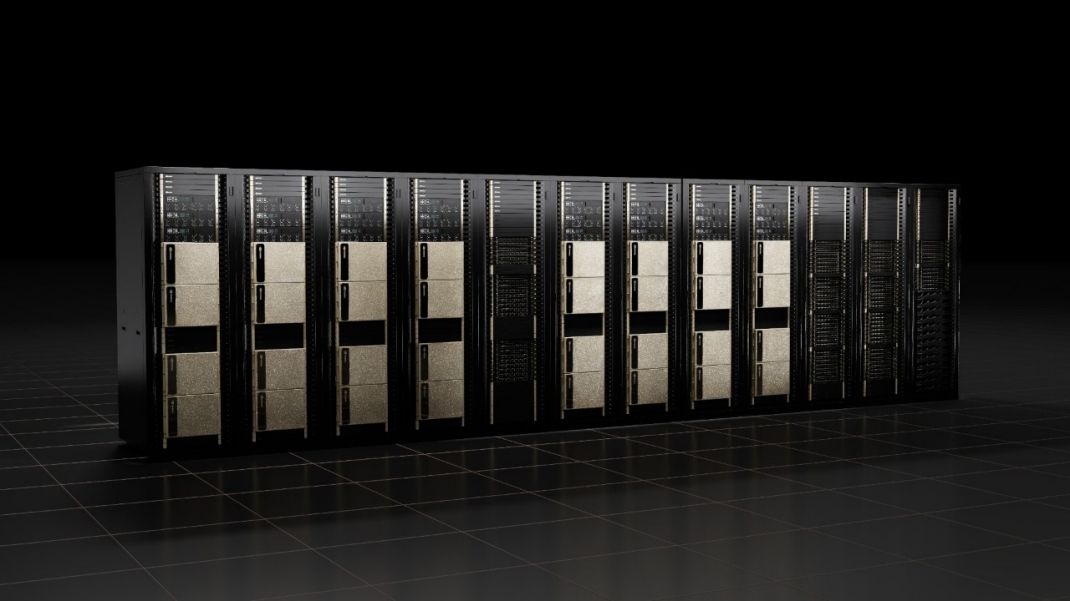
Image: Nvidia's Blackwell GPU platform, central to 2026 AI revenue forecasts, showcasing the next-gen chips powering data center dominance.
Financial Momentum Underpins Optimism
Nvidia's financials validate the hype. Trailing 12-month revenue hit $99.2 billion, with data center sales jumping 581% year-over-year to $29.8 billion in early 2024 periods, accelerating to $72.9 billion by January 2025.[3] Demand for Hopper and Blackwell GPUs outstrips supply, as tech giants race for AI supremacy.[1]
At a current P/E of 45.1 on $4.05 adjusted earnings, the stock appears undervalued relative to growth prospects. Analysts project earnings acceleration to 58% in fiscal 2027, justifying premiums if margins hold above 50%.[1][4] Market cap has surged over 50x since late 2021, yet forward multiples suggest room for expansion as AI capex from Big Tech exceeds $1 trillion cumulatively by 2027.

Image: Chart illustrating Nvidia's NVDA stock trajectory alongside AI market growth, highlighting P/E compression and 2026 targets.
Risks and Challenges Loom Large
Despite the enthusiasm, headwinds could temper gains. Seeking Alpha notes Alphabet's custom Tensor Processing Units (TPUs) exposing Nvidia's vulnerabilities, as hyperscalers develop in-house silicon to cut costs.[original excerpt] EE Times warns of a potential "reckoning" in 2026, with AI hype cooling if return on investment lags amid inference shifts favoring cheaper ARM-based chips.[original excerpt]
Competition intensifies from AMD's MI300 series, Intel's Gaudi, and startups like Grok's xAI chips. Supply chain bottlenecks persist, and U.S.-China trade tensions restrict advanced exports, capping H100/H200 sales.[4] Valuation risks mount if growth slows; a P/E contraction to 30 could cap shares at $220 even with earnings beats.[1]
CNBC reports three top analysts staying bullish but cautioning on overreliance on a few customers, who represent 50%+ of revenue.[original excerpt] Macro factors like interest rates and recession fears add volatility, with NVDA down from 2025 peaks.

Image: Nvidia CEO Jensen Huang presenting AI roadmap, key figure behind 2026 strategies amid analyst scrutiny.
Market Context and Broader Implications
Nvidia's fate intertwines with the $1 trillion AI infrastructure buildout, where it commands 80-90% GPU share.[1][3] Fiscal 2026 Q3 results showed 66% data center growth, but inference workloads—projected at 90% of future compute—favor efficiency over raw power, pressuring Nvidia to innovate.[4]
For investors, the consensus buy rating (via TipRanks) offers entry amid dips, but diversification is key given concentration risks.[2][5] Success in 2026 depends on Blackwell ramp-up and Rubin debut, potentially adding $100 billion+ in annualized revenue.
Broader industry impact reverberates: Nvidia's wins accelerate AI adoption, but a stumble could trigger a sector pullback, hitting peers like Broadcom and TSMC. Analysts like Ives argue the "AI story is just starting," with enterprise AI spend ramping 5x by 2028.[3]

Image: Visual of Nvidia-powered AI data center, representing the infrastructure driving 2026 revenue forecasts and risks.
In summary, Nvidia heads into 2026 as AI's linchpin, with upside targets implying $250-$350 shares if execution holds, balanced against competitive and cyclical threats. Investors eye Q4 earnings for clues on sustained momentum.
References:
- [Source 1]
- [Source 2]
- [Source 3]
- [Source 4]
- [Source 5]
- [Source 6]


