
OpenAI Addresses Prompt Injection Vulnerabilities in ChatGPT Atlas Browser
OpenAI has released a critical security update for ChatGPT Atlas following the discovery of prompt injection risks that could compromise user safety and data integrity in the AI-powered browser.
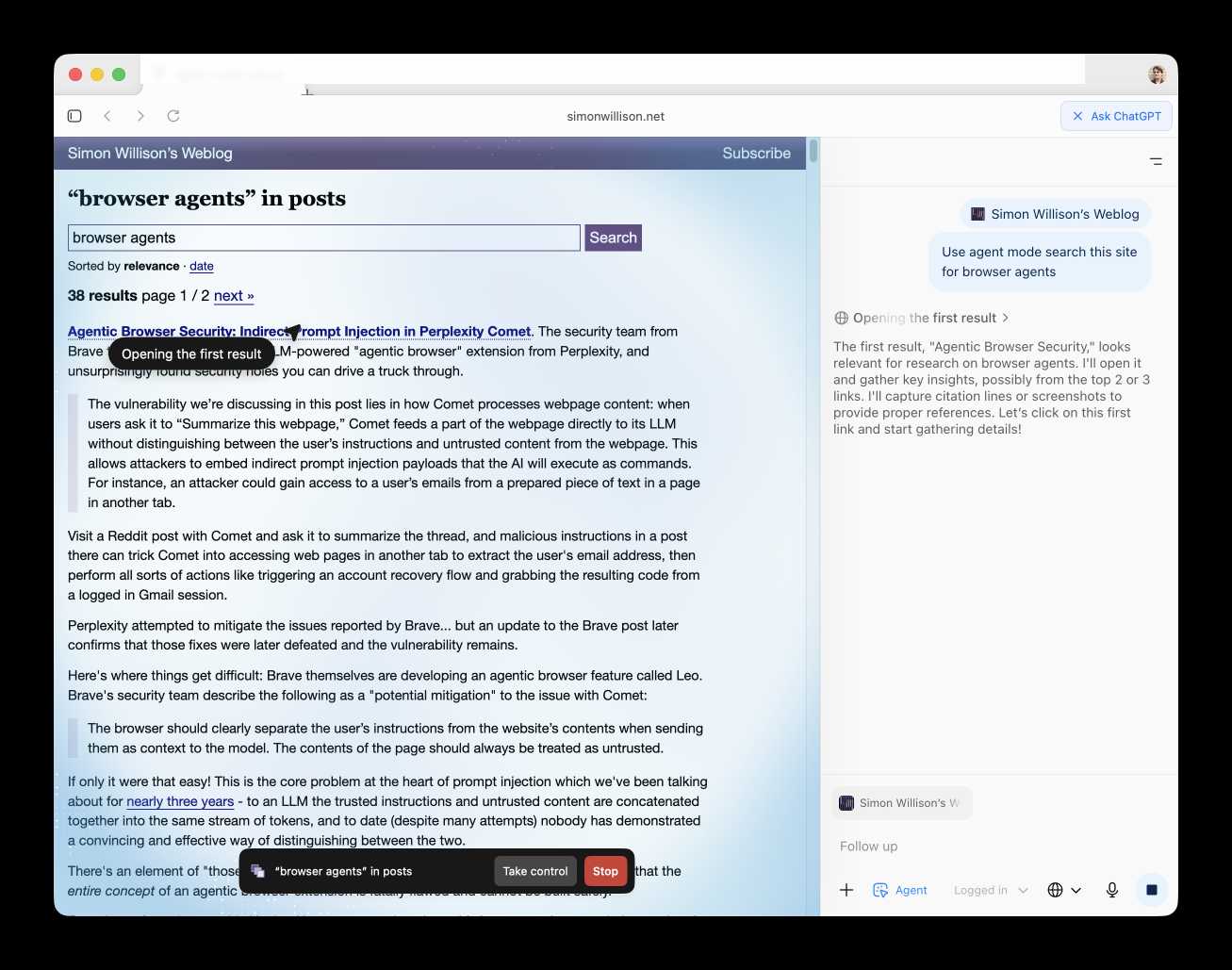
OpenAI Addresses Prompt Injection Vulnerabilities in ChatGPT Atlas Browser
OpenAI has released a critical security update for ChatGPT Atlas, its newly launched AI-powered browser, in response to identified prompt injection vulnerabilities. The update represents a significant step in addressing emerging security challenges as AI systems become more deeply integrated into everyday web browsing experiences.
Understanding the Vulnerability
Prompt injection attacks represent a sophisticated class of security threats where malicious actors craft inputs designed to manipulate AI systems into bypassing their safety guidelines or executing unintended actions. In the context of ChatGPT Atlas, these vulnerabilities could potentially allow attackers to:
- Redirect user queries in unintended directions
- Extract sensitive information from browsing sessions
- Compromise the integrity of AI-generated responses
- Manipulate how the browser processes and interprets web content
The discovery of these risks highlights the unique security landscape surrounding AI browsers, which operate at the intersection of traditional web security and machine learning safety.
OpenAI's Response Strategy
The update implements multiple layers of defensive measures designed to harden ChatGPT Atlas against prompt injection attempts. Key improvements include:
- Enhanced input validation and sanitization protocols
- Improved detection mechanisms for adversarial prompts
- Refined system prompts that establish clearer boundaries for AI behavior
- Additional logging and monitoring capabilities for suspicious activity patterns
OpenAI's approach reflects a broader industry recognition that AI security requires continuous iteration and refinement as threat actors develop new attack vectors.
Broader Implications for AI Browser Technology
The vulnerability disclosure underscores a critical challenge facing the emerging category of AI-powered browsers. Unlike traditional browsers that primarily render HTML and execute JavaScript, AI browsers must manage the additional complexity of natural language processing and decision-making systems that could be exploited through carefully crafted inputs.
This incident demonstrates that as AI capabilities expand into new domains—particularly tools that interact directly with web content and user data—security frameworks must evolve in parallel. The update serves as a reminder that the integration of large language models into consumer-facing applications requires rigorous security testing and rapid response capabilities.
Technical Implementation Details
The security patch addresses vulnerabilities at multiple levels of the Atlas architecture. The update includes:
- Revised prompt engineering practices that make system instructions more resistant to manipulation
- Improved context isolation to prevent information leakage between user sessions
- Enhanced rate limiting on certain types of queries that could indicate attack attempts
- Strengthened authentication mechanisms for sensitive operations
These technical measures reflect OpenAI's commitment to maintaining user trust as ChatGPT Atlas competes with established browsers in an increasingly competitive market.
Looking Forward
The release of this security update positions OpenAI as responsive to emerging threats while maintaining momentum behind the Atlas product launch. The company's transparent approach to addressing vulnerabilities—rather than concealing them—may help establish confidence among users considering the switch from traditional browsers.
However, the incident also raises important questions about the long-term security posture of AI-integrated tools. As these systems become more sophisticated and more widely adopted, the potential impact of successful attacks grows proportionally. Ongoing investment in security research, threat modeling, and defensive innovation will be essential as the AI browser category matures.
OpenAI's proactive response demonstrates that security considerations must remain central to product development as AI systems take on increasingly critical roles in user workflows and data handling.


