
Senator Jon Ossoff Targeted by Deepfake Video in Georgia Race
Senator Jon Ossoff, a critic of deepfakes, is targeted by a deepfake video in the Georgia Senate race, highlighting electoral integrity concerns.
Jon Ossoff Targeted by Deepfake Video in Georgia Race
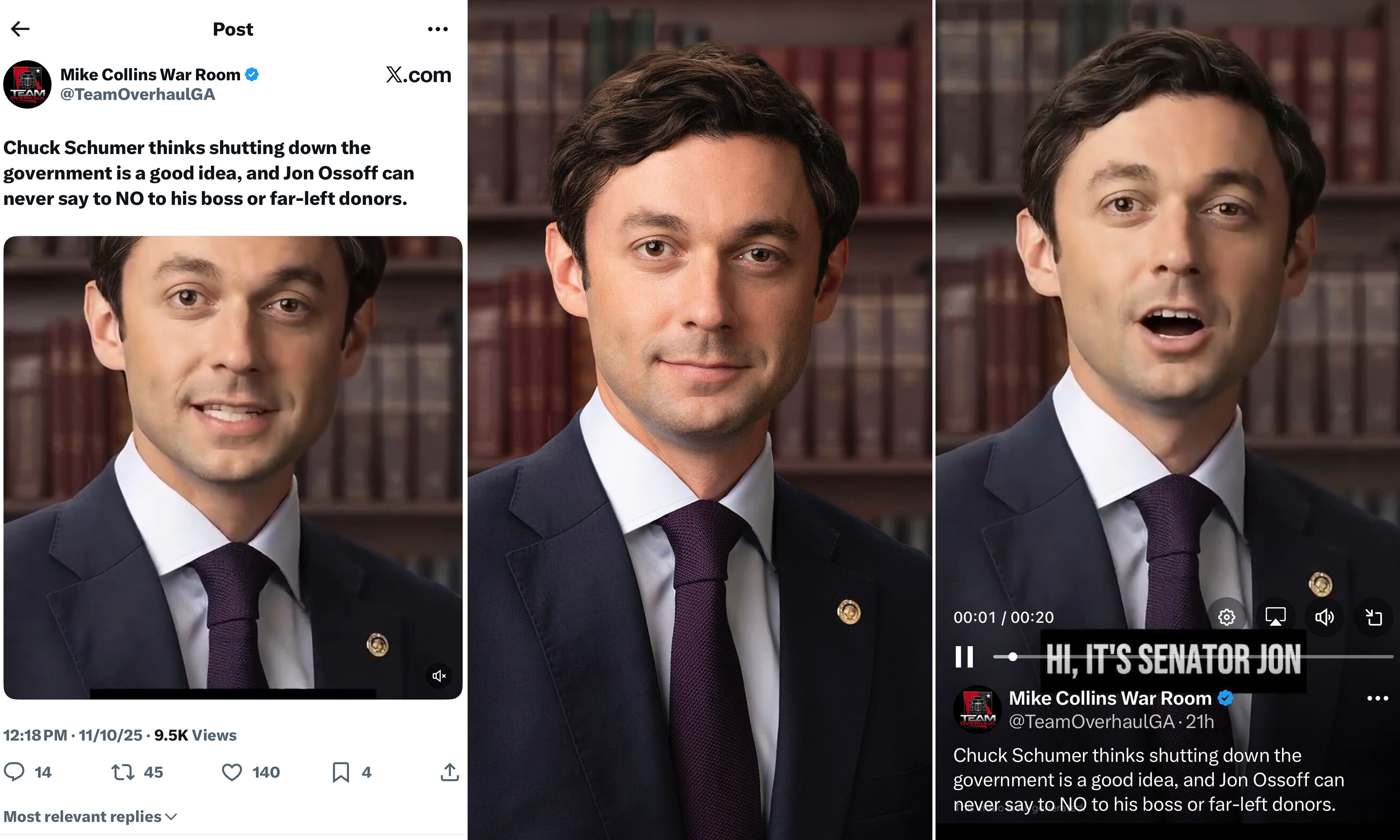
In a striking turn of events, U.S. Senator Jon Ossoff, a vocal critic of deepfake technology, has become the subject of a deepfake video. The video, circulated online by a political opponent, falsely portrays Ossoff making statements he never actually made, demonstrating the very threat he has long warned about.
The Emergence of the Deepfake Video
The controversy arose when a doctored video surfaced on social media platforms, including X (formerly Twitter), showing Ossoff apparently discussing a government shutdown in a manner inconsistent with his known positions. The video was posted by the campaign account of U.S. Representative Mike Collins, a Republican from Jackson, Georgia, who is running in the GOP primary for Ossoff’s Senate seat. The manipulated clip caused confusion and concern among voters and political observers alike.
The Georgia Democratic Party swiftly condemned the video, labeling it as a deceptive deepfake effort intended to mislead voters. A party spokesperson remarked: “Instead of trying to deceive voters with deepfake videos, low-integrity Congressman Mike Collins should explain his own record.” The backlash highlighted the increasing role of synthetic media in political battles and the risks it poses to electoral integrity.
Context: Ossoff’s Warnings on Deepfakes
Senator Ossoff has been an outspoken critic of deepfake technology, which uses artificial intelligence to create hyper-realistic but fabricated videos and audio recordings. Deepfakes can be weaponized to spread misinformation, manipulate public opinion, and sabotage political figures by attributing false statements or actions to them.
Ossoff’s concerns are shared by many cybersecurity experts and lawmakers who see deepfakes as a growing threat to democracy. The technology’s rapid advancement has outpaced current regulatory frameworks, creating vulnerabilities during election cycles. Ossoff has advocated for stronger legislation to combat malicious deepfake use, including transparency requirements for political advertising and penalties for creators of deceptive synthetic media.
Impact on the 2026 Senate Race
The incident underscores the high stakes of the 2026 Senate race in Georgia, where Ossoff faces a challenging Republican primary opponent in Mike Collins. The use of deepfake videos could influence voter perceptions and trust, complicating the political landscape.
Campaign strategists warn that such tactics, while potentially effective in the short term, risk long-term damage to political discourse and voter confidence. The Georgia Democratic Party’s quick condemnation suggests a determination to combat misinformation aggressively.
Broader Implications: Deepfakes in Politics
This episode is emblematic of a broader trend: the weaponization of deepfake technology in political campaigns worldwide. As AI-generated synthetic media becomes increasingly convincing, politicians and the public must navigate a new era of digital deception.
Experts recommend increased public awareness and education about deepfakes, alongside technological solutions such as deepfake detection tools and stringent content verification processes by social media platforms. Legislative efforts are also underway at both state and federal levels to address the challenges posed by deepfakes.
Visual Evidence and Public Reaction
Images related to this story include screenshots of the controversial deepfake video posted by Mike Collins’ campaign, photos of Senator Jon Ossoff at public appearances, and graphics illustrating how deepfake technology works. These visuals help contextualize the issue and demonstrate the sophistication of current synthetic media tools.
Public reaction has been mixed, with some expressing concern over the potential misuse of AI in elections, while others question the ethical boundaries of political campaigning in the digital age.
Key Takeaways
- Senator Jon Ossoff, a critic of deepfake technology, has become a victim of a politically motivated deepfake video disseminated by a GOP primary rival.
- The video falsely depicts Ossoff making controversial statements about a government shutdown, stirring confusion among voters.
- The Georgia Democratic Party condemned the video, highlighting the threat deepfakes pose to electoral integrity.
- This incident illustrates the growing challenge deepfakes present to political campaigns and democratic processes.
- Experts call for stronger regulation, public education, and improved detection technologies to combat synthetic media misuse.
Images related to this article:
- Official photos of Senator Jon Ossoff from recent Senate sessions and campaigns.
- Screenshots of the disputed deepfake video shared by Mike Collins’ campaign.
- Infographics explaining how deepfake technology manipulates video content.
These images provide concrete visual context to the unfolding story of how deepfake technology is reshaping political communication and the risks it entails for democratic accountability.


