
Sunday's Memo Robot: How $200 Smart Gloves Are Training the Next Generation of Home Assistants
A startup has unveiled an innovative approach to domestic robotics, using specialized $200 gloves to train wheeled home assistants. The Memo robot represents a shift in how machines learn household tasks through direct human demonstration.
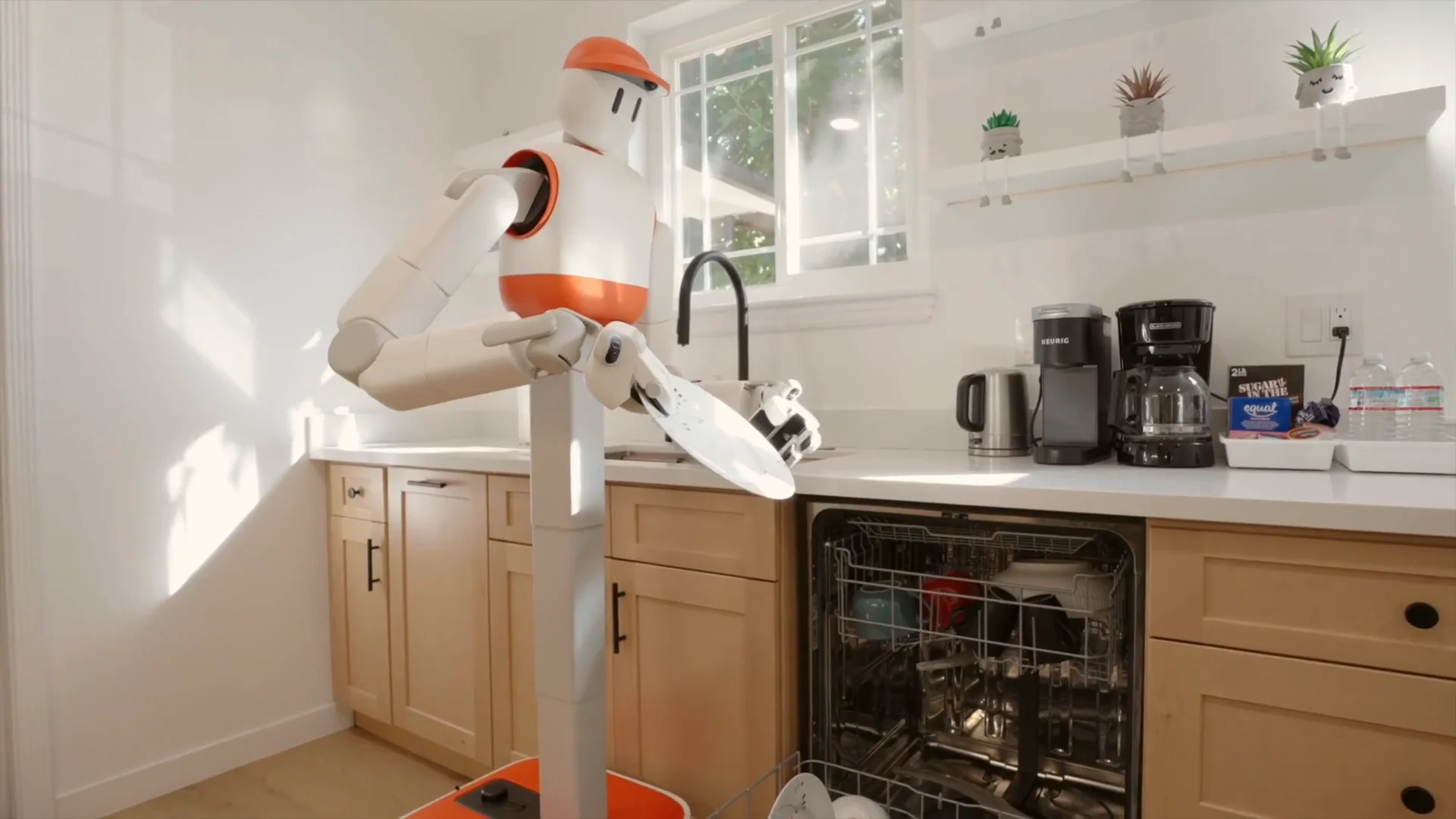
A New Training Paradigm for Domestic Robots
A startup has introduced a novel approach to robotics training that sidesteps traditional programming methods. Rather than relying solely on code or pre-programmed routines, the company has developed a system where operators wear specialized gloves costing $200 to directly train domestic robots through demonstration. This hands-on methodology marks a significant departure from conventional automation, enabling machines to learn complex household tasks through intuitive human guidance.
The approach addresses a persistent challenge in robotics: translating human intentions into machine-executable actions. By capturing hand movements and gestures through the specialized gloves, the system creates a direct learning pathway that allows robots to understand and replicate household chores with greater accuracy and adaptability.
The Memo Robot: Design and Capabilities
The resulting robot, known as Memo, represents a practical implementation of this training philosophy. The wheeled domestic assistant features a half-bodied design that prioritizes functionality while maintaining an approachable, non-threatening appearance. Its compact form factor allows navigation through typical home environments without requiring extensive space modifications.
Memo is engineered to handle a variety of household tasks:
- Dishwashing and kitchen cleanup — The robot can manage delicate dishware and navigate kitchen layouts
- Tidying and organization — Capable of moving objects and organizing living spaces
- General household assistance — Adaptable to various domestic chores through the glove-based training system
- Learning from demonstration — Each training session adds to the robot's behavioral library
The Technology Behind the Gloves
The $200 smart gloves serve as the critical interface between human operators and the robotic system. These gloves capture detailed motion data, including hand position, finger articulation, and force application. This granular data allows the robot to understand not just what tasks to perform, but how to perform them with appropriate pressure, speed, and precision.
This training methodology offers several advantages over traditional approaches:
- Reduced programming overhead — No need for extensive code development for each new task
- Intuitive learning curve — Operators don't require robotics expertise to train the system
- Task flexibility — New capabilities can be added through additional training sessions
- Human-centered design — The system respects the nuances of human movement and decision-making
Market Implications and Industry Context
The introduction of Memo reflects growing investor and consumer interest in domestic robotics. As labor costs rise and household automation becomes increasingly desirable, startups are exploring diverse technical approaches to make home robots practical and affordable.
The $200 glove investment represents a reasonable cost for training infrastructure when amortized across multiple robots or extended use. For consumers purchasing the robot itself, this training methodology could translate to more capable and responsive machines compared to purely algorithmic alternatives.
Challenges and Future Considerations
While the glove-based training system shows promise, several questions remain. Scaling this approach to mass production will require standardizing the training process and ensuring consistency across different operators. Additionally, the robot's real-world performance in diverse home environments—with varying layouts, lighting conditions, and unexpected obstacles—will be crucial to market acceptance.
The longevity and reliability of the wheeled platform in daily household use also warrant attention. Domestic robots must withstand frequent operation, potential collisions, and the wear associated with continuous task execution.
Key Sources
- Sunday's official announcements regarding the Memo robot and training methodology
- Industry coverage of domestic robotics and machine learning applications in home automation
- Technical specifications and capability demonstrations from the startup's product documentation
The Memo robot and its associated training system represent an interesting inflection point in domestic automation. By prioritizing human-demonstrable learning over pure algorithmic approaches, the startup has created a pathway that could accelerate adoption of household robots across diverse consumer segments.


