

Vercel Launches Agent Skills: An Open-Source Package Manager for AI Coding Agents
Vercel has released Agent Skills, an open-source package manager designed to give AI agents access to curated programming capabilities. The platform bundles 10 years of React and Next.js optimization rules to enhance AI-driven code generation.
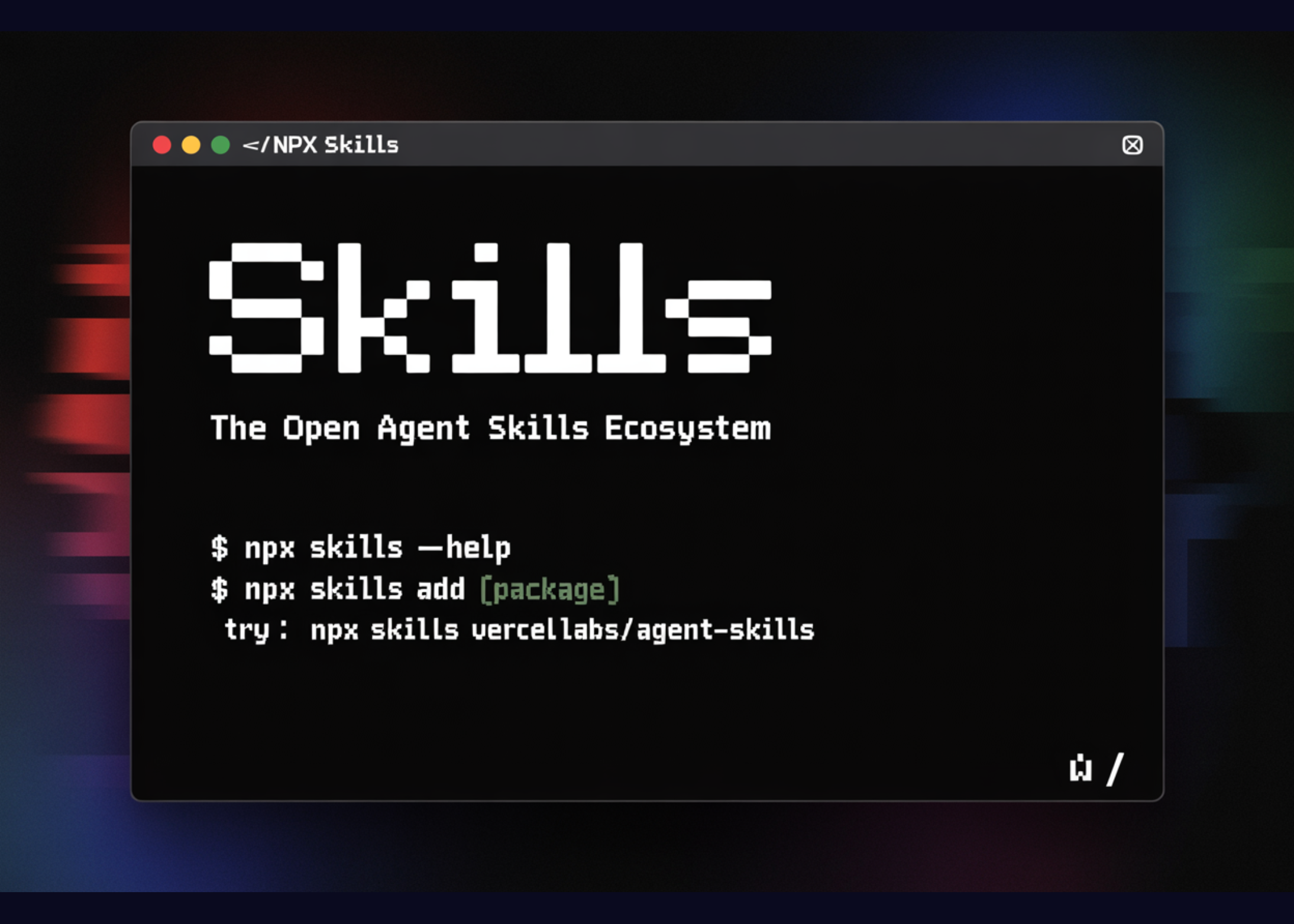
The AI Agent Tooling Race Intensifies
The competition to build better AI development tools just shifted into a new gear. Vercel has released Agent Skills, an open-source package manager that fundamentally changes how AI agents access and execute programming tasks. Rather than relying on generic language models, this tool gives AI agents structured access to verified, production-grade capabilities—a critical distinction as enterprises demand more reliable AI-assisted development.
The move reflects a broader industry shift: raw AI capability matters less than controlled access to domain-specific knowledge. Vercel is betting that by packaging a decade of React and Next.js optimization rules into a standardized format, developers can deploy AI agents that actually understand modern web development conventions rather than hallucinating plausible-sounding code.
What Agent Skills Actually Does
Agent Skills functions as a package manager specifically designed for AI agents, not humans. The core innovation is deceptively simple: instead of asking an AI model to generate code from scratch, Agent Skills provides a curated library of pre-validated programming tasks that agents can invoke with confidence.
Key capabilities include:
- Structured Task Execution: AI agents can call verified functions rather than generating arbitrary code
- React & Next.js Optimization: Embedded best practices from 10 years of production deployments
- Framework Integration: Works with Vercel's AI Gateway and broader developer tooling
- Open-Source Transparency: Community-driven development and auditing
The technical architecture matters here. By constraining what AI agents can do to what they should do, Vercel reduces hallucination risk—a persistent problem in AI-assisted coding where models confidently generate non-functional or insecure code.
Integration with Vercel's Broader AI Strategy
This release doesn't exist in isolation. Agent Skills integrates with Vercel's existing AI infrastructure, including the AI Gateway and emerging developer productivity tools. According to Vercel's developer productivity vision, the company is positioning itself as the operating system for AI-augmented development workflows.
The timing aligns with broader industry momentum. Comparisons between AI SDKs show developers increasingly evaluating platforms on their ability to integrate AI agents into existing development pipelines—not just provide raw model access.
The Competitive Angle
This matters because other platforms haven't solved the "controlled AI execution" problem effectively. While OpenAI's function calling and Anthropic's tool use provide mechanisms for structured AI behavior, Vercel's approach is specifically tailored to the development workflow—with pre-baked knowledge about what good React and Next.js code actually looks like.
The open-source release is strategic. By making Agent Skills freely available on GitHub, Vercel builds community adoption and establishes a de facto standard for AI agent capabilities in web development. This mirrors how Next.js became the default React framework—not through corporate mandate, but through genuine developer preference.
What This Means for Development Teams
For teams using AI agents in their development pipeline, Agent Skills represents a meaningful upgrade in reliability. Rather than treating AI as a creative brainstorming tool, teams can now deploy agents as actual contributors to production workflows—with guardrails.
The package manager model also suggests a future where AI agent capabilities are modular and composable. As more organizations contribute skills to the ecosystem, the platform could evolve into something resembling npm for AI agent capabilities—a critical infrastructure layer for AI-augmented development.
Vercel's move signals confidence that AI agents are moving beyond experimental territory into production deployment. The question now is whether other platforms will follow with similar tooling, or whether Vercel establishes early dominance in this emerging category.


