
AI in Asset Management: A Co-Pilot, Not an Autopilot
AI is reshaping asset management by providing insights and enhancing accuracy, while human managers retain control, ensuring strategic and ethical alignment.
AI in Asset Management: A Co-Pilot, Not an Autopilot
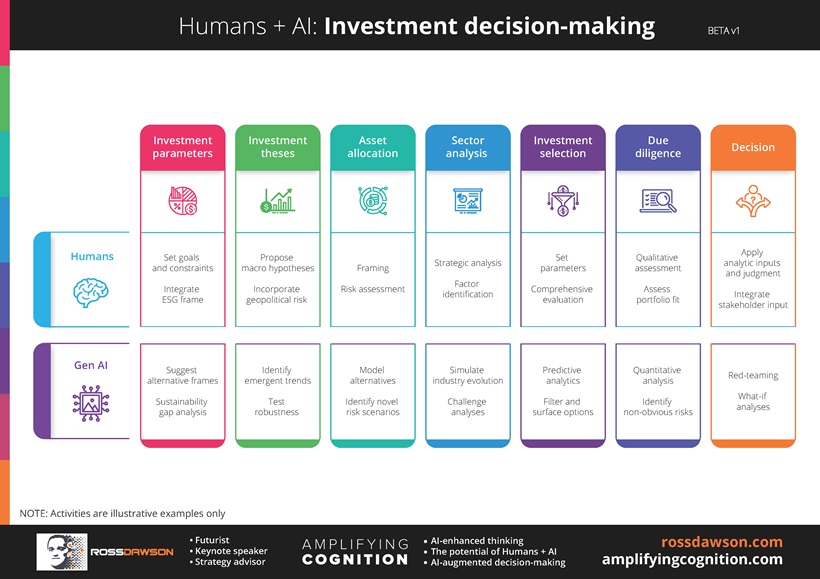
Artificial Intelligence (AI) is transforming the investment landscape, reshaping decision-making in asset management while preserving human discretion. As of 2025, AI serves as a powerful co-pilot—providing data-driven insights, automating due diligence, and enhancing forecasting accuracy—while human portfolio managers retain ultimate control over investment execution. This symbiosis reflects both technological progress and regulatory caution, highlighting AI’s role as an indispensable advisor rather than a button-pusher.
The Current Role of AI in Investment Decision-Making
AI technologies excel at analyzing vast datasets, generating predictive models, and automating routine tasks. In private equity and traditional asset management, AI-powered due diligence tools can reduce the deal evaluation timeline from weeks to days by automating financial modeling and preliminary screening. About 95% of venture capital and private equity firms now utilize AI in some form during investment decisions, with a growing number embedding AI into core functions at a rate of 30% annually.
Yet, despite AI’s strengths in data analysis, it has not supplanted the critical human judgment required to finalize investment choices. AI can guide decisions by highlighting risks, opportunities, and forecasting outcomes but does not autonomously execute trades or commit capital. This human-in-the-loop approach is vital to balancing AI’s predictive power with the nuanced understanding of market sentiment, regulatory frameworks, and strategic alignment that managers provide.
Why AI Cannot (and Should Not) “Push the Button”
Several factors explain why AI systems do not directly “push the button” on investments:
-
Regulatory and Governance Constraints: Many firms anticipate tighter future restrictions on AI use, particularly concerning autonomous decision-making in financial markets. Governance policies require human oversight to ensure accountability and compliance.
-
Complexity and Uncertainty in Markets: Investment environments are dynamic, influenced by geopolitical events, regulatory changes, and behavioral factors that AI models cannot fully capture or anticipate. Human judgment remains critical to interpreting AI outputs contextually.
-
Risk Management and Ethical Considerations: Fully autonomous AI trading raises concerns about systemic risks, market manipulation, and unintended consequences. Human managers provide ethical checks and risk controls that machines alone cannot enforce.
How AI Enhances Investment Processes Today
AI’s contribution to investment management is multifaceted:
-
Due Diligence Automation: AI accelerates data processing and financial modeling, enabling faster, more thorough evaluations of potential deals or securities.
-
Predictive Forecasting: Advanced AI-driven financial planning tools generate real-time, dynamic forecasts that incorporate historical data, market trends, and external factors, improving forecast accuracy by up to 5% and cutting analysis time in half.
-
Decision Support and Scenario Modeling: AI-powered dashboards offer scenario simulations, risk assessments, and performance metrics, empowering portfolio managers to make faster, more informed decisions.
-
Operational Efficiency: Beyond investment strategy, AI automates administrative tasks, client servicing, and compliance monitoring, allowing human teams to focus on high-value strategic activities.
Market and Investment Implications
Financial markets are witnessing a surge in AI innovation and investment. The United States leads the world in private AI investment, with over $470 billion spent on AI infrastructure, research, and startups since 2013, far outpacing other advanced economies. This investment fuels continuous improvements in AI capabilities for asset management, from machine learning models to agentic AI systems that understand complex goals and execute multi-step tasks under human supervision.
Investors are increasingly positioning portfolios to capture AI’s growth potential, recognizing it as a transformative economic force. However, recent studies caution that while AI adoption is widespread, only about 25% of AI projects yield positive return on investment, underscoring the importance of integrating AI thoughtfully within human-led processes.
The Outlook: AI as a Co-Pilot, Not an Autopilot
Leading financial institutions emphasize that AI should augment rather than replace human intelligence in investing. Platforms like JPMorgan’s agentic AI and tools such as AInvest exemplify this philosophy by providing deep research capabilities and personalized insights that empower traders and managers without removing human control.
This collaborative model aligns with regulatory expectations and practical realities. AI’s role is to guide, inform, and enhance decision-making, while experienced professionals retain authority to “push the button”—ensuring investments align with strategy, ethics, and compliance.
AI’s influence on investment decisions is profound and growing, but its current—and near-future—role is that of an indispensable advisor rather than an autonomous actor. This balance preserves human judgment at the core of investing while harnessing AI’s unparalleled data-processing power to drive smarter, faster, and more informed choices in a complex financial landscape.


