
AI Investment Spurs Global Diversification in 2025
AI investment in 2025 highlights the need for global diversification to mitigate risks associated with concentrated tech sectors.
Global Investing in the AI Era: Why International Diversification Matters Now More Than Ever
The artificial intelligence investment landscape has undergone a dramatic transformation in 2025, fundamentally reshaping how global investors should approach portfolio construction. As massive capital flows concentrate in a handful of mega-cap technology companies, financial experts are making a compelling case for why international diversification has become not just prudent but essential for navigating the AI revolution.
The Concentration Risk in AI Investing
The current market environment presents a paradox that should concern even the most optimistic technology investors. The Magnificent Seven—a group of dominant tech companies including Microsoft, Apple, Nvidia, Tesla, Amazon, Alphabet, and Meta—now represent approximately 35% of the S&P 500's total market capitalization, a concentration level that exceeds the peak of the dot-com bubble. This unprecedented concentration has created what financial analysts describe as significant single-theme risk, where investor portfolios become heavily dependent on the continued success of a narrow band of companies.
The performance disparity tells part of the story. The Morningstar Global Next Generation Artificial Intelligence Index delivered returns of 46.65% year-to-date as of November 6, 2025, substantially outpacing the broader Morningstar US Market Index's 15% return. However, this stellar performance masks a troubling underlying dynamic: the gains have been concentrated among infrastructure builders rather than distributed across the global economy.
The Capital Spending Boom and Historical Precedent
Big Tech firms are embarking on history's largest capital spending spree, with plans to invest $5.2 trillion over five years. In 2025 alone, these companies are projected to spend nearly $400 billion, with AI capital spending accounting for an estimated half of US GDP growth. This scale of investment is staggering when placed in historical context.
Kai Wu's October 2025 research paper, "Surviving the AI Capex Boom," reveals a sobering reality: current AI spending already exceeds the internet boom's peak relative to GDP, and when adjusted for the shorter useful life of AI chips compared to physical infrastructure, it surpasses even the railroad buildout of the 1860s-1870s. Historical analysis of previous infrastructure booms demonstrates a consistent pattern—massive capital investments typically result in overinvestment, excess competition, and ultimately, poor stock returns for investors.
The mathematics of sustainability present another concern. To justify current and projected spending levels, the AI industry needs to generate $2 trillion in annual revenue by 2030, yet current AI revenues stand at only $20 billion—requiring a staggering 100-fold increase. This gap between investment and revenue generation raises fundamental questions about whether the market is pricing in overly optimistic scenarios.
The Transition from Asset-Light to Asset-Heavy Models
The Magnificent Seven achieved their dominance through asset-light business models that leveraged intangible assets, generating impressive 22.5% returns on invested capital. However, their massive AI infrastructure investments are fundamentally transforming these companies into asset-heavy operations—a transition that historical precedent suggests will pressure returns.
This structural shift creates vulnerability precisely at the moment these companies command the largest share of investor portfolios. As they transition to capital-intensive models, the competitive dynamics that once favored these incumbents may shift, creating opportunities and risks that extend well beyond Silicon Valley.
The Case for Global Diversification
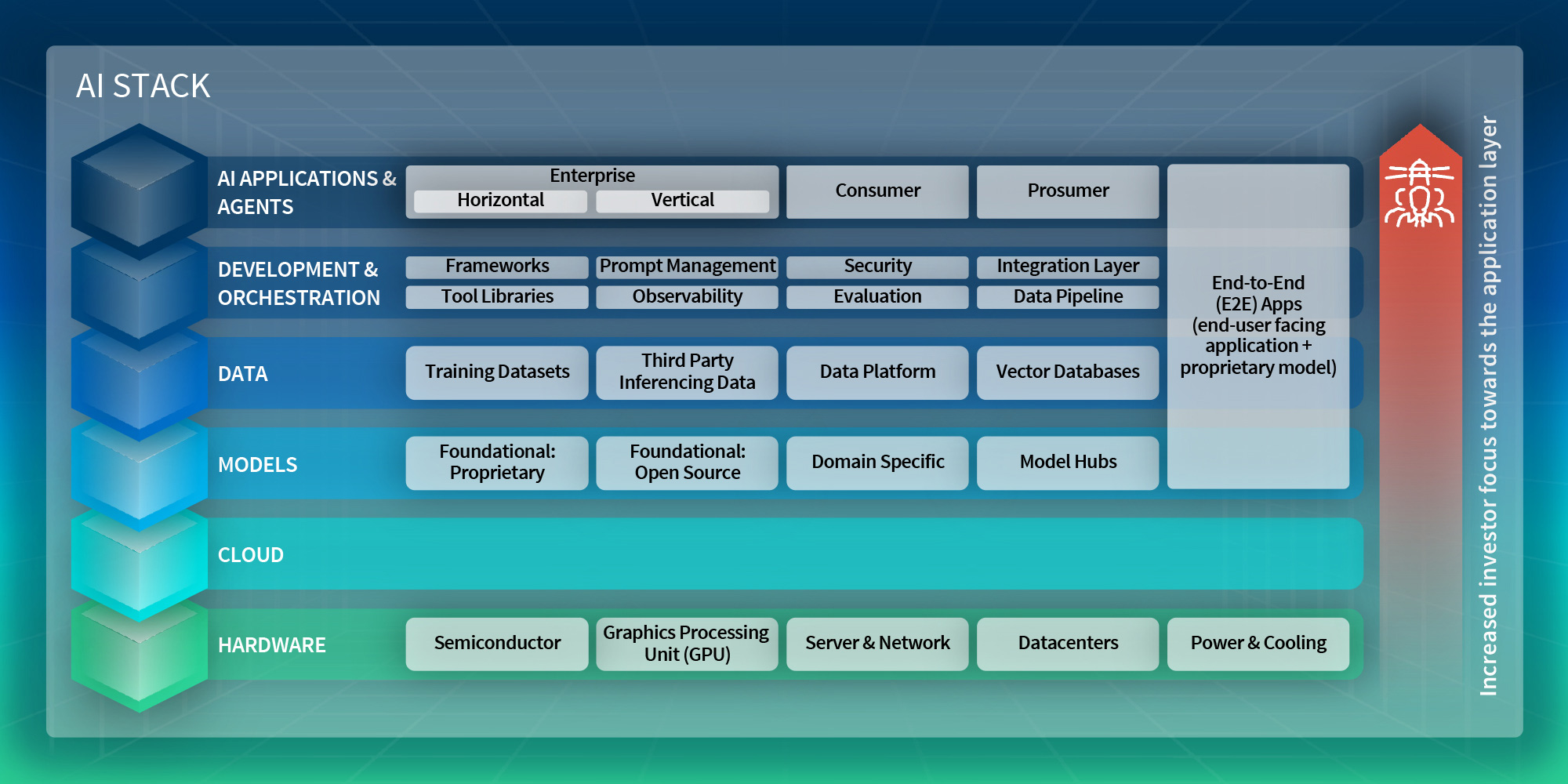
Rather than abandoning AI exposure entirely, financial advisors and analysts increasingly recommend a more sophisticated approach: capturing AI benefits across geographies and sectors rather than concentrating bets on infrastructure builders. This strategy acknowledges that AI's transformative potential extends far beyond the companies building data centers and training large language models.
Companies using AI to improve operations—such as JPMorgan Chase, Caterpillar, and Walmart—represent alternative vehicles for AI exposure with significantly lower capital requirements and better diversification characteristics. These businesses benefit from AI without shouldering the burden of massive infrastructure buildouts, positioning them potentially more favorably for long-term returns.
International markets offer additional diversification benefits. BlackRock's perspective on global investing in the AI era emphasizes that international diversification may be even more important today, as companies worldwide increasingly adopt and implement AI technologies across their operations. This global approach reduces dependency on the concentrated US tech sector while capturing growth opportunities in emerging markets and developed economies outside North America.
Mixed Performance Across Technology Subsectors
The performance divergence within technology itself underscores the importance of diversification. While AI-focused stocks have surged, US software stocks have significantly lagged. The Morningstar Software Index gained only 2.6% over the past year, compared to the Morningstar Global AI & Big Data Consensus Index's 26.6% gain. Despite this underperformance, Morningstar analysts assess software stocks as significantly undervalued, suggesting potential opportunity for investors willing to look beyond the obvious AI plays.
Storage and semiconductor companies have bucked broader trends, with Western Digital returning 251% and Micron returning 174% in 2025, demonstrating that AI-related gains extend across the supply chain. This performance distribution reinforces the case for thoughtful portfolio construction that captures AI exposure across multiple vectors rather than concentrating in headline-grabbing mega-cap names.
Strategic Recommendations for the AI Era
The consensus among leading financial analysts points toward a balanced approach: maintain AI exposure while implementing value discipline, focus on early adopters with lower capital requirements, and maintain diversification across the AI value chain and geographies. This strategy acknowledges both the genuine transformative potential of artificial intelligence and the historical risks associated with unprecedented capital concentration in narrowly focused sectors.
As 2025 draws to a close and investors look toward 2026 and beyond, the case for global diversification in the AI era has never been stronger. The technology revolution is real, but the way to participate in it sustainably may look quite different from simply buying the companies making the largest headlines.


