
OpenAI Revolutionizes ChatGPT with App Integrations
OpenAI's ChatGPT now integrates with apps like Spotify and Zillow, transforming it into a multifunctional platform for seamless AI interaction.
OpenAI Revolutionizes ChatGPT with App Integrations
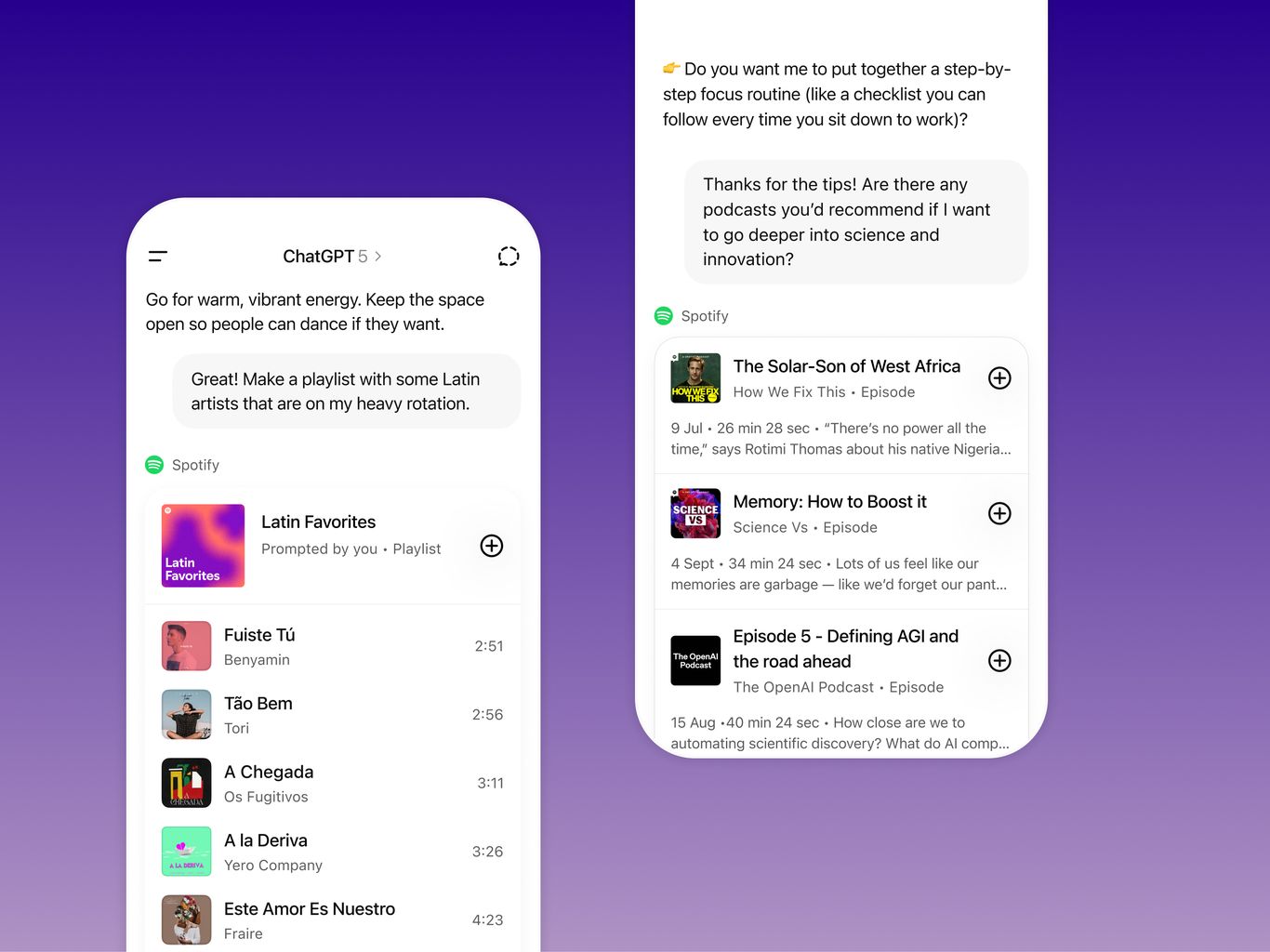
OpenAI has unveiled a groundbreaking feature for ChatGPT that allows users to connect directly with popular third-party applications such as Spotify and Zillow within the chatbot interface. Announced on October 6, 2025, at OpenAI’s annual developer event in San Francisco, this new capability—referred to as "talking to apps"—enables seamless interaction with a variety of services without leaving the ChatGPT environment, greatly enhancing user convenience and productivity.
What Is the “Talking to Apps” Feature?
This feature lets ChatGPT users embed and interact with multiple third-party apps directly inside their chat sessions. For example:
- Spotify integration allows users to request music recommendations, create personalized playlists, and control playback through natural-language commands.
- Zillow integration enables browsing real estate listings, viewing photos, maps, and pricing, and receiving housing market insights—all within the chatbot window. While scheduling tours or connecting with agents still redirects users to Zillow’s native platform, the browsing experience remains fully integrated in ChatGPT.
The integrations are designed to be conversational and context-aware, meaning the apps respond to user prompts naturally and adapt to the ongoing dialogue, making digital multitasking smoother.
Broader App Ecosystem and Developer Opportunities
OpenAI’s CEO Sam Altman highlighted the strategic potential of this new framework for developers. The company has released an Apps SDK that allows developers to embed interactive, adaptive applications inside ChatGPT, effectively creating a mobile-app-store-like ecosystem for AI tools.
Currently, OpenAI has partnered with a pilot group of well-known companies including:
- Booking.com
- Canva
- Coursera
- Figma
- Expedia
- Spotify
- Zillow
More partners and applications are expected to join later in 2025, expanding the range of use cases from creative tools and education to travel and real estate.
How Users Benefit
This innovation transforms ChatGPT from a standalone conversational AI into a multi-functional platform where users can perform diverse tasks in one place:
- Streamlined workflow: Users no longer need to switch between multiple apps or browser tabs.
- Contextual assistance: ChatGPT can suggest apps at the right moment based on the conversation’s context.
- Accessibility: The feature is available to anyone with a ChatGPT account, free or paid, though it is currently not rolled out in the European Union but is expected soon.
Industry Impact and Implications
This integration marks a significant step in the AI arms race, as OpenAI pushes ChatGPT beyond text generation into a unified interface for app-driven interaction. By embedding apps within ChatGPT, OpenAI is positioning its platform as a central hub for productivity, entertainment, and commerce.
The ability to embed apps like Spotify and Zillow highlights how AI can blend content consumption (music) with practical decision-making tools (real estate browsing), all conversationally and in real time. This could reshape how millions of users approach daily digital tasks, reducing friction and increasing engagement on the platform.
For developers, the new Apps SDK opens up vast opportunities to reach ChatGPT’s growing user base—over 800 million users globally—at the precise moment they need specific services, potentially transforming software distribution and user acquisition strategies.
Challenges and Future Outlook
While promising, the integration also presents challenges:
- Privacy and data security: Handling user data across multiple integrated apps will require stringent safeguards.
- User experience consistency: Balancing conversational AI with app-specific interfaces demands careful design to avoid confusion.
- Regulatory considerations: The phased rollout, especially delays in the EU, reflects ongoing regulatory scrutiny over AI and data use.
Looking ahead, OpenAI’s vision seems to be the creation of an AI-powered ecosystem where users can seamlessly interact with a variety of services through natural language. This could herald a future where AI is not just a tool but a platform uniting diverse digital experiences.
OpenAI’s announcement at its 2025 developer event signals a major leap in AI usability, turning ChatGPT into a versatile assistant capable of handling entertainment, real estate, education, and more—all within a single chat interface. As more apps join the ecosystem, this innovation could redefine how users interact with technology daily, making AI a central hub of digital life.


