
OpenAI Warns Businesses: Vibe Coding Poses Significant Security Risks
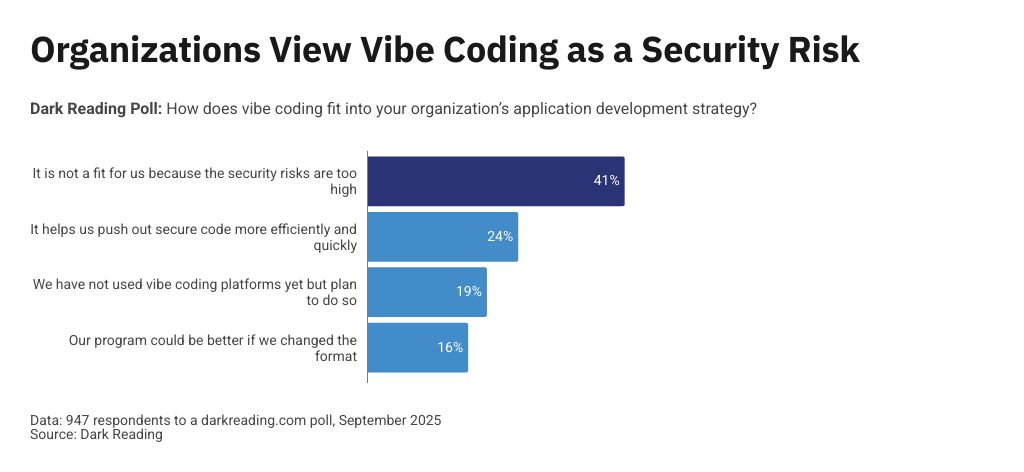
OpenAI has raised critical concerns about vibe coding's security implications for enterprises. As developers increasingly rely on intuitive, pattern-based coding approaches, security vulnerabilities are multiplying—threatening business infrastructure and data integrity.
OpenAI Warns Businesses: Vibe Coding Poses Significant Security Risks
OpenAI has issued a formal warning regarding the security vulnerabilities inherent in vibe coding practices, urging businesses to implement stricter safeguards and validation protocols. As development teams increasingly adopt intuitive, pattern-based coding methodologies, the organization emphasizes that convenience and speed cannot come at the expense of security.
What Is Vibe Coding?
Vibe coding represents a development approach where programmers rely on intuition, pattern recognition, and contextual understanding rather than rigorous specification and formal verification. This methodology gained prominence with the rise of AI-assisted development tools, which enable developers to generate code snippets based on natural language descriptions and contextual cues. While this accelerates development cycles, it simultaneously introduces significant blind spots in security validation.
The Security Vulnerability Landscape
OpenAI's warning highlights several critical risk vectors associated with vibe coding:
- Insufficient Input Validation: Code generated through intuitive patterns often lacks comprehensive input sanitization, creating pathways for injection attacks and data manipulation.
- Cryptographic Weaknesses: Pattern-based approaches frequently result in weak or improperly implemented encryption mechanisms.
- Authentication Bypasses: Vibe-coded authentication layers may contain logical flaws that attackers can exploit.
- Dependency Chain Risks: Developers may inadvertently incorporate vulnerable third-party libraries without proper security auditing.
- Lack of Error Handling: Intuitive code generation often produces insufficient error handling, potentially exposing sensitive system information.
Business Implications
For enterprises, the stakes are particularly high. Vibe coding vulnerabilities can lead to:
- Data Breaches: Compromised applications become vectors for unauthorized access to proprietary and customer data.
- Regulatory Compliance Failures: Organizations may violate GDPR, HIPAA, SOC 2, and other compliance frameworks.
- Operational Disruption: Security incidents can result in costly downtime and remediation efforts.
- Reputational Damage: Security failures erode customer trust and market confidence.
Recommended Mitigation Strategies
Organizations adopting vibe coding should implement layered security controls:
Code Review and Validation Establish mandatory peer review processes where security-trained personnel audit all generated code before deployment. Automated static analysis tools should scan for common vulnerability patterns.
Security Testing Integrate dynamic application security testing (DAST), software composition analysis (SCA), and penetration testing into development pipelines. These practices identify vulnerabilities before production deployment.
Developer Training Ensure development teams understand security fundamentals and the specific risks associated with pattern-based code generation. Security awareness should be embedded in development culture.
Architectural Controls Implement defense-in-depth strategies including API rate limiting, Web Application Firewalls (WAF), and network segmentation to contain potential breaches.
The Path Forward
OpenAI's warning does not advocate abandoning vibe coding entirely. Rather, the organization emphasizes that this methodology must be paired with rigorous security practices. Development teams should view vibe coding as a productivity enhancement tool, not a replacement for security discipline.
The technology industry faces a critical juncture: balancing development velocity with security rigor. Organizations that treat vibe coding as a convenience feature without corresponding security investments will inevitably face elevated breach risk. Conversely, teams that implement comprehensive validation and testing frameworks can harness vibe coding's productivity benefits while maintaining robust security postures.
Key Sources
- OpenAI Security Advisory on Vibe Coding Risks
- Industry analysis on AI-assisted code generation vulnerabilities
- Enterprise security best practices documentation
Businesses must recognize that in an era of sophisticated cyber threats, the speed gained through vibe coding is meaningless if it compromises the integrity and security of critical systems.


