

UBTech's Airbus Deal Signals China's Push into Industrial Robotics
Chinese robotics firm UBTech has secured a partnership with Airbus to deploy humanoid robots in aircraft production, marking a significant milestone for automation in aerospace manufacturing.
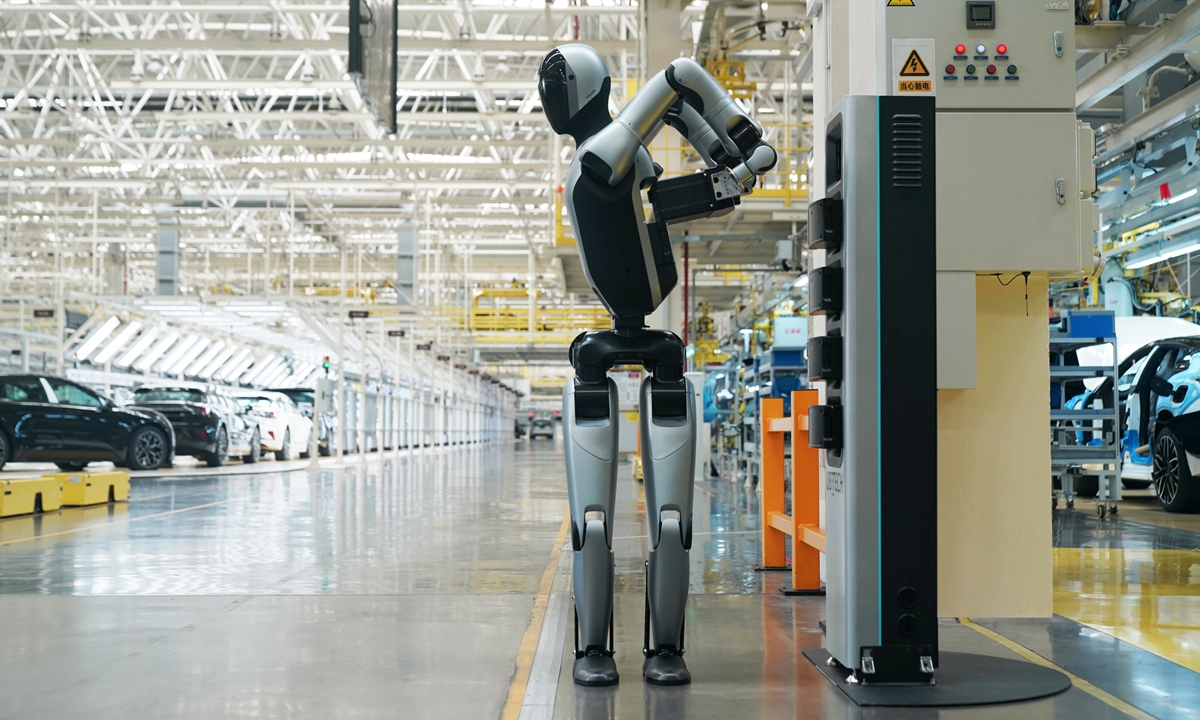
The Aerospace Automation Race Heats Up
The competition for dominance in industrial robotics just shifted into high gear. UBTech has signed a cooperation agreement with Airbus to deploy humanoid robots in aircraft production facilities—a move that positions the Chinese robotics company as a serious contender in the aerospace sector and signals growing confidence in AI-powered automation for complex manufacturing environments.
This partnership represents more than a simple vendor relationship. According to market analysis, the deal serves as validation that humanoid robots have matured beyond research labs and into real-world industrial applications. For Airbus, one of the world's largest aircraft manufacturers, the decision to integrate UBTech's robots suggests the technology is ready for mission-critical production lines.
What This Deal Actually Means
The implications extend across multiple dimensions:
Manufacturing Efficiency: Airbus will test China-made humanoid robots in aviation production, potentially automating repetitive assembly tasks, quality inspections, and material handling. Aircraft production involves intricate work in confined spaces—precisely where humanoid robots offer advantages over traditional industrial arms.
Market Validation: UBTech's shares surged on the Airbus order announcement, reflecting investor confidence that the company has crossed a critical threshold from prototype to production-ready systems. This is the kind of enterprise validation that typically precedes broader market adoption.
Geopolitical Dimensions: The partnership also underscores a broader trend: Western manufacturers are increasingly willing to partner with Chinese robotics firms despite trade tensions. Following Texas Instruments, Airbus has also engaged with UBTech, suggesting that technological capability is overriding some political considerations in procurement decisions.
The Competitive Landscape
UBTech isn't alone in pursuing aerospace applications. Tesla's Optimus, Boston Dynamics' robots, and other humanoid platforms are all eyeing industrial deployment. However, UBTech's advantage lies in its existing relationships with Chinese manufacturers and its focus on practical, cost-effective solutions rather than cutting-edge research.
UBTech Robotics has become the first humanoid robotics stock in Hong Kong, giving it access to capital markets and institutional credibility. This financial backing provides resources to scale production and support enterprise clients like Airbus.
What Comes Next
The Airbus partnership likely functions as a pilot program. Real-world aerospace manufacturing will test the robots' durability, precision, and ability to work alongside human workers in safety-critical environments. Success here could open doors to other aerospace suppliers and defense contractors.
The broader question: if humanoid robots prove viable in aerospace—an industry with some of the highest quality and safety standards—what other sectors become viable? The answer may determine whether humanoid robotics becomes a transformative technology or remains a niche solution.
For now, UBTech's shares have jumped on the Airbus humanoid robot order, and the market is watching closely to see if this partnership delivers on its promise.


