
AI Accelerates Drug Discovery: 10,000 Proteins Analyzed in 24 Hours
A breakthrough AI system now processes 10,000 proteins daily, dramatically accelerating drug discovery timelines. This advancement reshapes how pharmaceutical companies identify viable drug targets in the race to bring treatments to market faster.
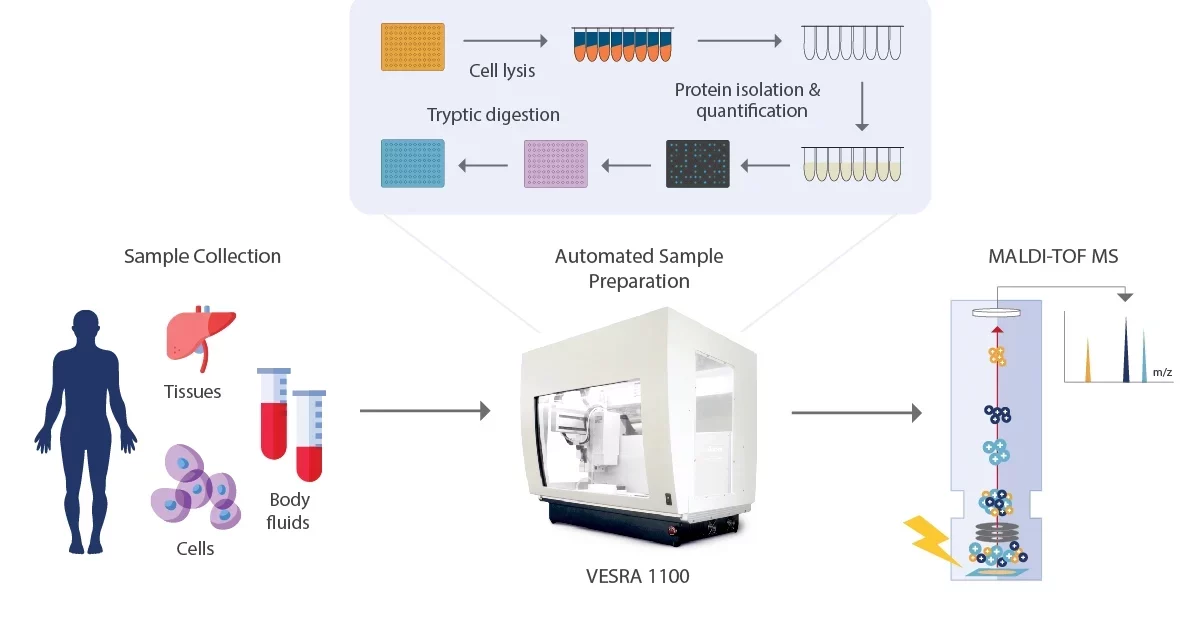
The Protein Analysis Arms Race Heats Up
The pharmaceutical industry faces a persistent bottleneck: identifying viable drug targets from millions of protein candidates remains painfully slow. Now, a new AI system is changing that equation by analyzing 10,000 proteins in a single day—a capability that according to industry observers represents a significant leap forward in computational drug discovery.
This development arrives at a critical moment. As precision medicine startups gain momentum, the ability to rapidly screen protein interactions has become a competitive necessity. Traditional methods—manual analysis, conventional screening—simply cannot keep pace with the scale of biological data now available.
How the System Works
The AI platform leverages machine learning to identify protein-protein interactions, structural properties, and binding affinities at unprecedented speed. Rather than relying on sequential laboratory testing, the system processes proteomics data computationally, flagging promising candidates for further validation.
Key capabilities include:
- Rapid screening: 10,000 protein analyses per day versus weeks with traditional methods
- Pattern recognition: AI identifies subtle structural relationships humans might miss
- Target prioritization: Automatically ranks candidates by likelihood of therapeutic success
- Integration with genomics: Works alongside AI genomics platforms targeting specific disease areas like kidney and cardiorenal disease
Market Implications
The pharmaceutical sector is racing to adopt such technologies. As highlighted in recent industry analysis, companies that master AI-driven protein analysis gain substantial advantages: faster time-to-market, reduced R&D costs, and higher success rates in clinical trials.
This capability directly addresses a fundamental challenge in drug discovery. Of the thousands of potential targets identified in any given disease area, only a handful prove viable. AI systems that can rapidly eliminate poor candidates and elevate promising ones compress what once took months into days.
The Broader Context
The convergence of AI and proteomics reflects a larger shift in biotech. According to industry conferences and thought leaders, the integration of artificial intelligence across pharmaceutical workflows—from target identification through clinical trial design—is becoming standard practice rather than cutting-edge novelty.
However, challenges remain. AI predictions still require wet-lab validation. False positives can waste resources. And the technology works best when trained on diverse, high-quality datasets—a requirement that not all organizations can meet.
What's Next
The real test lies in translation. Can this 10,000-protein-per-day capability actually accelerate drug approvals? Early indicators suggest yes, but the pharmaceutical industry moves deliberately. Regulatory bodies must gain confidence in AI-assisted target selection. Clinical teams must validate that computationally identified targets translate to effective medicines.
For now, the system represents a meaningful inflection point: protein analysis is no longer the rate-limiting step in early-stage drug discovery. The bottleneck has shifted downstream, to validation and development—where the next wave of AI innovation will likely focus.


