
Chinese GPU Manufacturer Challenges Nvidia with Advanced Chip Architecture
A Chinese GPU maker has unveiled a new chip architecture designed to compete directly with Nvidia's dominant position in AI and data center computing. The announcement signals intensifying competition in the high-performance GPU market.
Chinese GPU Manufacturer Challenges Nvidia with Advanced Chip Architecture
A Chinese GPU manufacturer has introduced a new chip architecture aimed at breaking into the lucrative AI and data center computing market, where Nvidia currently maintains overwhelming dominance. The announcement represents a significant push by domestic chipmakers to reduce reliance on foreign technology and establish competitive alternatives in performance-critical applications.
Architecture and Technical Specifications
The new GPU architecture incorporates advanced design principles targeting high-performance computing workloads, particularly for large language models and AI acceleration tasks. The design focuses on memory bandwidth optimization and computational efficiency—two critical factors in determining GPU performance for modern machine learning applications.
Key architectural features include:
- Enhanced memory subsystems designed for improved data throughput
- Optimized tensor computation units for AI workload acceleration
- Improved power efficiency compared to previous generation designs
- Support for advanced interconnect standards for multi-GPU scaling
Market Context and Competition
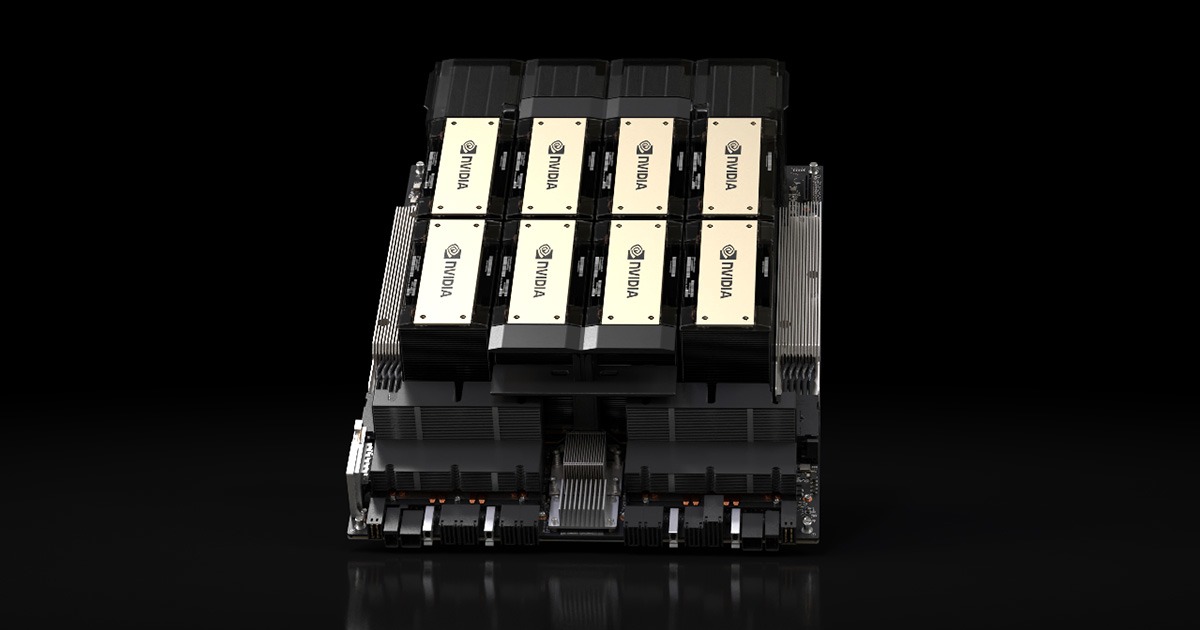
Nvidia's H200 GPU currently sets the benchmark for AI acceleration hardware, featuring 141GB of HBM3E memory and specialized tensor cores. The company's ecosystem dominance—built through CUDA software compatibility and years of developer investment—creates a formidable barrier to entry for competitors.
Chinese manufacturers have been accelerating their GPU development efforts amid U.S. export restrictions on advanced semiconductors. This new architecture represents a direct attempt to offer domestic alternatives that can handle enterprise-scale AI training and inference workloads without relying on foreign supply chains.
Technical Differentiation
The new Chinese GPU architecture differentiates itself through several design choices:
Memory Architecture: The chip implements a custom memory hierarchy optimized for the specific access patterns of transformer-based models and large language model inference.
Computational Density: Enhanced floating-point and integer computation capabilities per unit area, potentially offering better performance-per-watt metrics than competing designs.
Software Stack: Development of compatible software frameworks and libraries to support existing machine learning codebases, though full CUDA compatibility remains a challenge.
Industry Implications
This announcement reflects the broader semiconductor industry trend toward regional competition and supply chain diversification. As geopolitical tensions continue to shape technology policy, enterprises increasingly seek alternative sources for critical computing infrastructure.
The success of this architecture will depend not solely on raw performance metrics but on ecosystem development—including compiler support, library optimization, and developer adoption. Nvidia's entrenched position in software and developer communities provides substantial competitive advantages beyond pure hardware specifications.
Path Forward
The GPU market for AI applications remains in expansion phase, with demand far exceeding current supply. This creates opportunity for credible alternatives to gain market share, particularly in regions where geopolitical or regulatory factors favor domestic solutions.
However, closing the gap with Nvidia requires sustained investment in both hardware iteration and software ecosystem development. The company must demonstrate consistent performance improvements, reliability in production environments, and long-term commitment to customers evaluating multi-year infrastructure investments.
The introduction of this new architecture signals that competition in high-performance GPU computing is intensifying beyond Nvidia's traditional rivals, potentially reshaping the landscape for data center and AI acceleration hardware over the coming years.
Key Sources
- Industry analysis of GPU architecture trends and competitive positioning in AI computing markets
- Technical specifications and performance metrics from GPU manufacturer announcements
- Market research on semiconductor supply chain diversification and geopolitical impacts on technology competition


