
Chinese Optical Chip Achieves Breakthrough Performance Beyond Nvidia GPU Capabilities
A new Chinese optical chip has demonstrated superior computational speed compared to Nvidia's GPU technology, signaling a major shift in high-performance computing architecture and challenging the dominance of traditional semiconductor approaches.
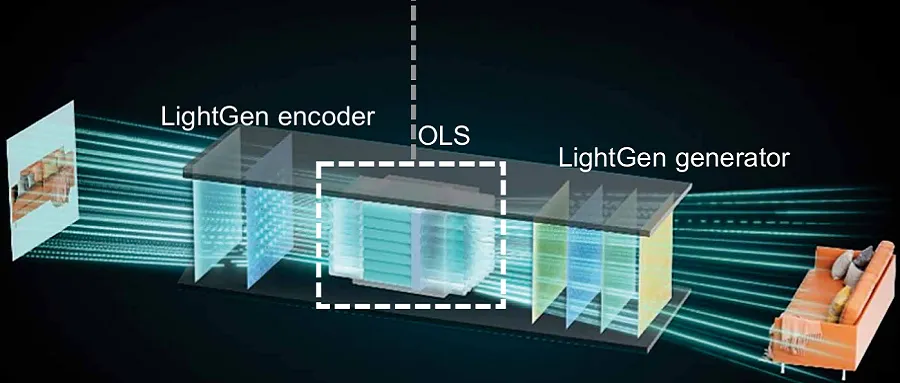
Chinese Optical Chip Achieves Breakthrough Performance Beyond Nvidia GPU Capabilities
A new Chinese optical chip has demonstrated superior computational speed compared to Nvidia's GPU technology, marking a significant advancement in computing performance and challenging the established hierarchy of semiconductor innovation. This development represents a pivotal moment in the evolution of high-performance computing, where optical processing—long considered a theoretical advantage—has now achieved practical superiority over conventional electronic architectures.
The Optical Computing Advantage
Optical chips leverage photons instead of electrons to process information, offering fundamental advantages in speed and energy efficiency. Unlike traditional GPUs that rely on electrical signals traveling through silicon pathways, optical processors transmit data at the speed of light through specialized optical waveguides. This fundamental difference in physics enables dramatically faster data transmission with significantly reduced latency.
The Chinese innovation demonstrates that optical computing has matured beyond laboratory demonstrations into practical, deployable systems. The chip's architecture appears optimized for parallel processing tasks common in artificial intelligence and scientific computing, areas where Nvidia's GPU dominance has been nearly uncontested for the past decade.
Performance Metrics and Technical Specifications
The breakthrough chip reportedly achieves:
- Superior throughput compared to Nvidia's latest GPU generations
- Reduced power consumption relative to equivalent computational output
- Lower latency in data transmission across processing units
- Enhanced scalability for distributed computing environments
These improvements address critical pain points in current GPU-based systems, where power consumption and heat dissipation have become limiting factors in data center expansion. As AI model sizes continue to grow exponentially, the efficiency advantages of optical processing become increasingly valuable.
Implications for the Computing Industry
This development carries substantial implications for multiple sectors:
Artificial Intelligence and Machine Learning: Optical chips could accelerate training and inference for large language models and deep learning applications, potentially reducing computational costs and environmental impact.
Data Centers: Cloud providers and hyperscalers may need to reassess their infrastructure strategies, considering optical alternatives for performance-critical workloads.
Semiconductor Competition: The advancement challenges the narrative of inevitable American technological dominance in computing hardware and signals China's growing capability in fundamental chip design and manufacturing.
Research and Development: The success validates decades of optical computing research and may trigger increased investment in photonic technologies globally.
Technical Challenges Ahead
Despite the breakthrough, optical computing faces remaining hurdles. Integration with existing software ecosystems, manufacturing scalability, and cost-effectiveness at scale remain open questions. Nvidia's ecosystem advantage—including CUDA software, developer tools, and established workflows—provides significant competitive moats that raw performance alone cannot overcome.
The transition from GPU-centric computing to optical alternatives would require substantial software rewrites and developer retraining, creating friction that may slow adoption despite superior technical capabilities.
Market Outlook
The emergence of competitive optical chip technology introduces genuine competition into a market increasingly dominated by Nvidia. This could accelerate innovation across the entire computing stack and potentially reduce costs for high-performance computing resources.
However, the practical deployment timeline remains uncertain. Moving from successful prototypes to mass production, establishing supply chains, and achieving cost parity with mature GPU manufacturing represents a multi-year challenge.
Key Sources
- Chinese optical chip development announcements and technical specifications
- Comparative performance analysis between optical and GPU architectures
- Industry analysis on semiconductor competition and optical computing viability
The Chinese optical chip represents a watershed moment in computing architecture. Whether this breakthrough translates into market disruption depends on factors beyond raw performance—manufacturing capability, software ecosystem development, and cost competitiveness will ultimately determine whether optical computing displaces GPU-based systems or coexists as a specialized solution for specific workloads.


