
Nvidia CEO Praises Tesla FSD While Launching Competing Alpamayo Platform
Nvidia's Jensen Huang acknowledges Tesla's Full Self-Driving as "world-class" while unveiling Alpamayo, a new autonomous vehicle development platform that positions the chipmaker as a direct competitor in the self-driving race.
The Autonomy Showdown Heats Up
The autonomous vehicle landscape just got more competitive. While Nvidia CEO Jensen Huang publicly praised Tesla's Full Self-Driving as "world-class," the chipmaker simultaneously unveiled Alpamayo, a new platform designed to accelerate autonomous vehicle development. The move signals that Nvidia isn't content being a behind-the-scenes supplier—it's now positioning itself as a direct player in the self-driving technology race.
Understanding the Competitive Landscape
Huang's compliment to Tesla carries strategic weight. By acknowledging FSD's capabilities, Nvidia establishes credibility while explaining how Alpamayo differs from Tesla's approach. Rather than positioning Alpamayo as superior, Nvidia frames it as a complementary technology stack—one that emphasizes open models and developer accessibility over proprietary, end-to-end learning systems.
The distinction matters:
- Tesla's approach: End-to-end neural networks trained on real-world driving data
- Nvidia's approach: Modular, reasoning-based architecture with open-source foundations
- Target audience: OEMs and autonomous vehicle startups seeking flexible platforms
What Alpamayo Brings to the Table
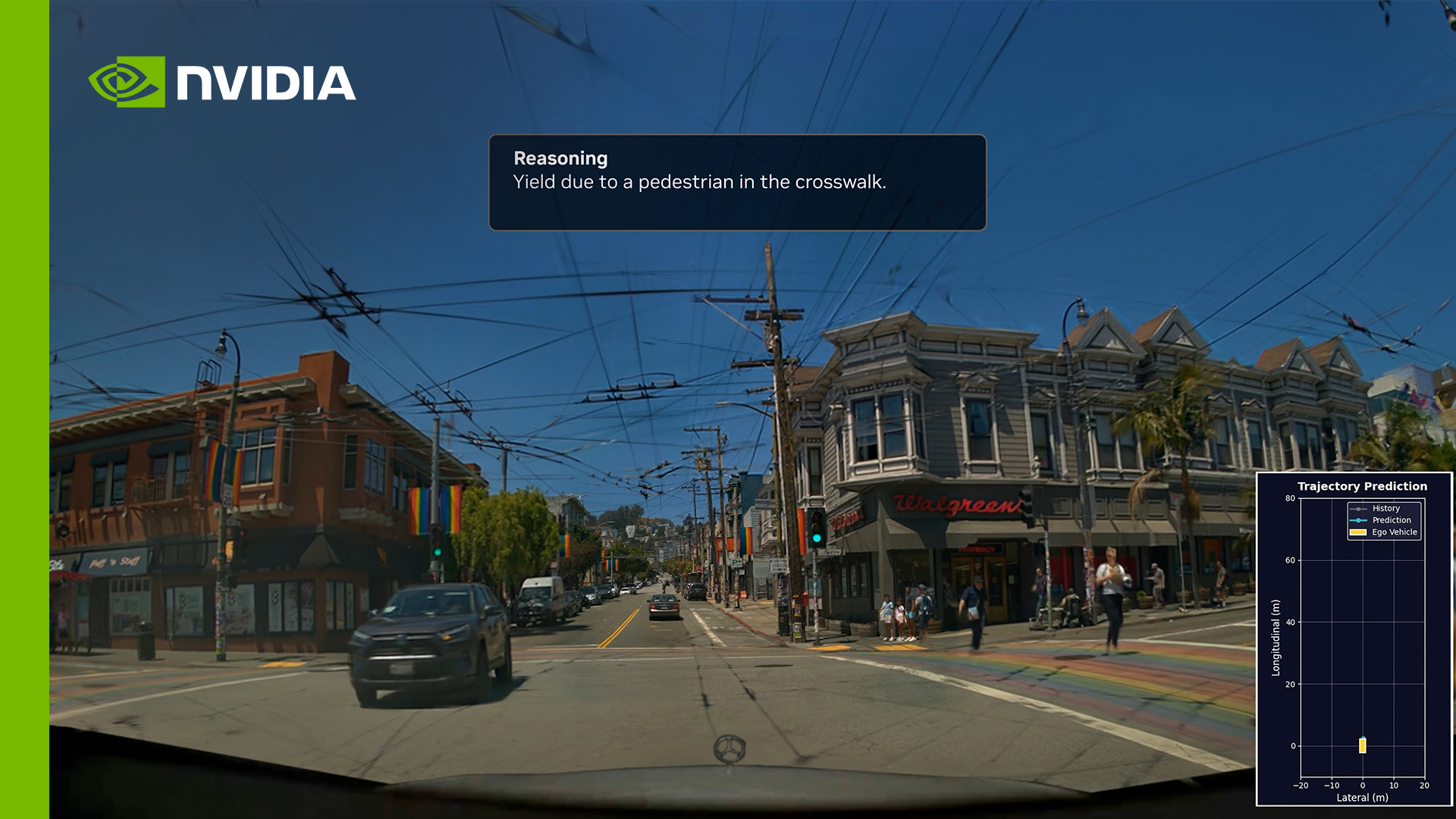
According to Nvidia's official announcement, Alpamayo represents a shift toward "human-like autonomy" through reasoning-based AI systems. The platform emphasizes transparency and modularity—critical factors for manufacturers and regulators concerned with explainability in autonomous systems.
Key features include:
- Open model architecture for customization
- Integration with existing automotive development pipelines
- Enhanced reasoning capabilities for complex driving scenarios
- Support for multiple sensor configurations and vehicle types
Tesla's Measured Response
Tesla has largely shrugged off Nvidia's autonomous push, maintaining confidence in its proprietary FSD system. The company's strategy relies on the scale advantage of its existing fleet—millions of vehicles generating real-world training data daily. This creates a data moat that's difficult for competitors to replicate.
However, Tesla faces regulatory scrutiny and safety concerns that Nvidia's more transparent, reasoning-based approach could address. The contrast between Tesla's black-box neural networks and Nvidia's explainable AI systems may prove decisive in markets prioritizing safety validation.
The Broader Industry Implications
Huang's dual message—praising Tesla while launching a competing platform—reflects the industry's maturation. The autonomous vehicle market is no longer winner-take-all. Instead, multiple architectures and business models are emerging:
- Tesla model: Proprietary data, end-to-end learning, direct consumer sales
- Nvidia model: Open platforms, modular systems, B2B partnerships with OEMs
- Traditional OEM model: Conservative, safety-first approaches with incremental autonomy
Technical details about Alpamayo's reasoning capabilities were showcased in Nvidia's recent presentation, demonstrating how the platform handles edge cases and complex urban driving scenarios.
What's Next
The real test comes in adoption. Will major automakers embrace Nvidia's open platform, or will they continue developing proprietary systems? Mercedes-Benz and other manufacturers have already signaled interest in Nvidia's technology stack, suggesting the market is fragmenting rather than consolidating around a single winner.
Huang's praise of Tesla appears calculated—acknowledging the competition while positioning Nvidia as the infrastructure provider for the broader autonomous vehicle ecosystem. In this framing, Nvidia doesn't need to beat Tesla; it needs to power everyone else.


