
Oracle Cloud Revenue Surges 34% as AI Demand Accelerates Enterprise Adoption
Oracle's cloud infrastructure business posted a remarkable 34% revenue increase, driven by surging enterprise demand for artificial intelligence capabilities. The growth underscores the company's strategic pivot toward cloud and AI services amid intensifying competition in the sector.
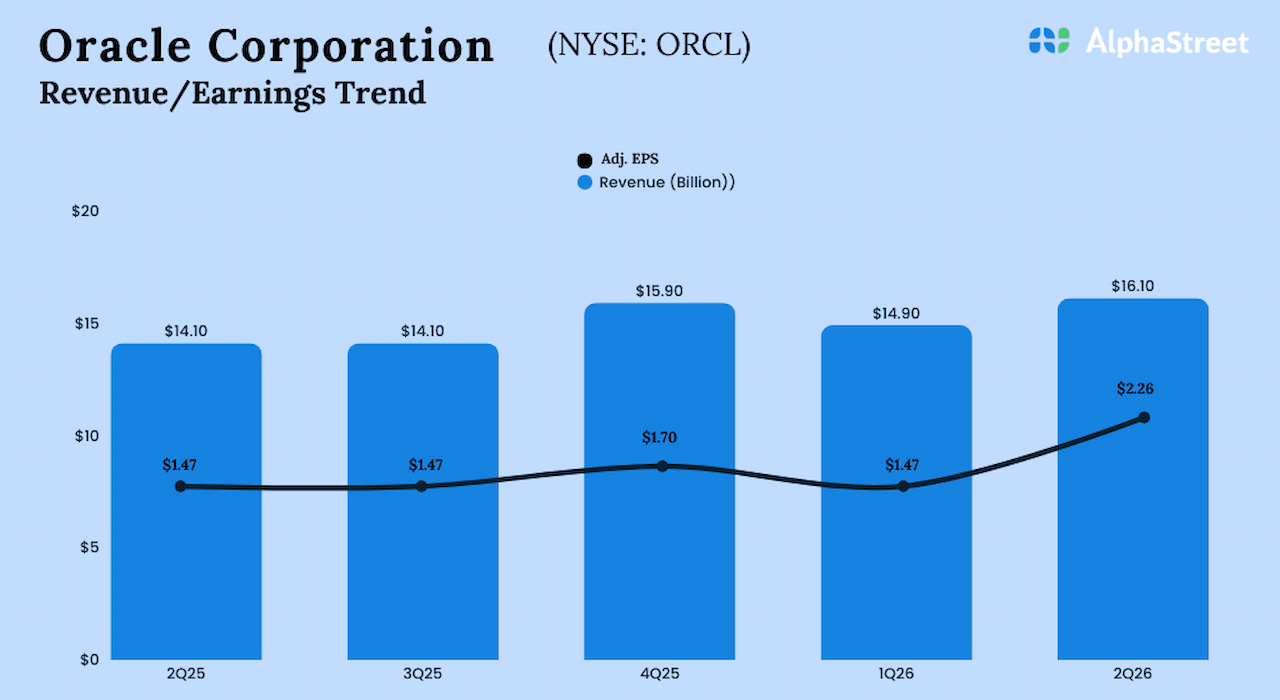
Oracle Cloud Revenue Surges 34% as AI Demand Accelerates Enterprise Adoption
Oracle's cloud revenue has surged by 34%, marking a significant acceleration in the company's transformation into a cloud-first, AI-enabled technology provider. The robust growth reflects mounting enterprise demand for artificial intelligence infrastructure and services, positioning Oracle as a major beneficiary of the ongoing AI boom reshaping the technology landscape.
The AI-Driven Growth Catalyst
The 34% increase in cloud revenue demonstrates Oracle's success in capitalizing on enterprise customers' urgent need for AI-ready infrastructure. Organizations across industries are rapidly deploying machine learning models, large language applications, and generative AI workloads—all of which require scalable, reliable cloud platforms. Oracle's cloud offerings, particularly its database and infrastructure services, have become increasingly attractive to enterprises seeking to integrate AI into their operations.
This growth trajectory reflects a broader market shift. As companies accelerate their digital transformation initiatives, cloud infrastructure providers with strong AI capabilities are capturing disproportionate market share. Oracle's cloud business, which includes both Infrastructure as a Service (IaaS) and Platform as a Service (PaaS) offerings, has positioned itself as a credible alternative to established cloud leaders.
Strategic Implications for Oracle's Business Model
The 34% growth rate signals that Oracle's multi-year cloud strategy is yielding tangible results. The company has invested heavily in building out its cloud infrastructure, particularly in regions where enterprise customers operate. This geographic expansion, combined with enhanced AI and machine learning capabilities, has strengthened Oracle's competitive positioning.
Key drivers of this growth include:
- Database modernization: Enterprises migrating legacy on-premises databases to Oracle Cloud Infrastructure (OCI)
- AI infrastructure demand: Organizations provisioning GPU-accelerated compute resources for machine learning workloads
- Autonomous database services: Growing adoption of Oracle's self-managing, self-securing database offerings
- Enterprise customer expansion: Larger deals with existing customers expanding their cloud footprint
Market Context and Competitive Dynamics
Oracle's 34% cloud revenue growth occurs within a highly competitive environment. Amazon Web Services (AWS), Microsoft Azure, and Google Cloud Platform continue to dominate overall cloud market share, but Oracle has carved out a defensible position through its strength in enterprise databases and vertical-specific solutions.
The AI acceleration is particularly significant for Oracle because it plays to the company's traditional strengths in enterprise software and data management. Unlike some cloud providers that are building AI capabilities from scratch, Oracle can leverage its decades of database expertise and enterprise relationships to deliver AI solutions tailored to complex business requirements.
Financial and Strategic Outlook
The 34% growth rate positions Oracle favorably for sustained expansion in cloud services. As enterprises continue investing in AI infrastructure—a trend expected to accelerate through 2025 and beyond—cloud providers with proven reliability, security, and performance in handling mission-critical workloads will capture increasing wallet share.
However, the company faces ongoing challenges. Maintaining this growth rate requires continued investment in infrastructure, talent acquisition, and product development. Additionally, Oracle must navigate pricing pressures as cloud competition intensifies and customers demand greater efficiency from their infrastructure spending.
Key Sources
- Oracle Q2 2026 Earnings Reports and financial disclosures
- Industry analysis on enterprise cloud adoption trends
- Market research on AI infrastructure demand and cloud provider positioning
The 34% surge in Oracle's cloud revenue represents more than a single quarter's strong performance—it signals a fundamental shift in how enterprises are architecting their technology infrastructure around AI capabilities. For Oracle, this growth validates years of strategic investment in cloud infrastructure and positions the company as a critical player in the enterprise AI revolution.


